
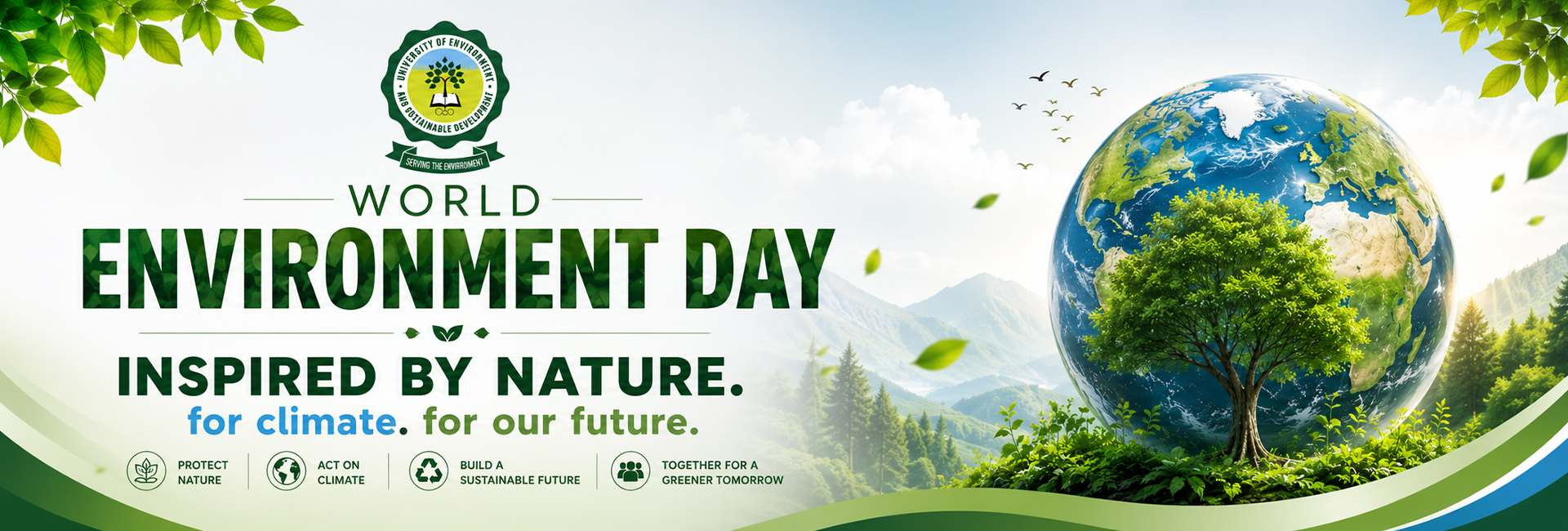
INSPIRED BY NATURE: for climate, for our future – A CALL TO ACTION FOR GHANA
By Prof. Edward Wiafe Debrah
University of Environment and Sustainable Development (UESD), Somanya.
On 5 June 2026, Ghana joins the global community in commemorating World Environment Day under the theme “Inspired by Nature: For Climate. For Our Future.” The theme, championed by the United Nations Environment Programme (UNEP), reminds humanity that nature is not merely a resource to be exploited but a partner in our collective quest for climate resilience, environmental sustainability, and human well-being. It emphasizes that healthy ecosystems are central to addressing climate change and securing a sustainable future for generations to come.
For Ghana, this theme carries a profound message. It calls on us to reflect on our relationship with the environment and to recognize that the future of our nation depends largely on how we manage our forests, rivers, wetlands, farmlands, coastal ecosystems, and biodiversity. Nature provides the services that sustain life: clean water, fertile soils, pollination, climate regulation, food production, and protection against disasters. When these systems are degraded, communities suffer, economies weaken, and vulnerabilities increase.
Ghana today faces a range of environmental challenges that threaten sustainable development. Climate change is already affecting rainfall patterns, agricultural productivity, water availability, and public health. Across many parts of the country, communities are experiencing prolonged dry spells, erratic rainfall, flooding, and increasing temperatures.
One of the most visible manifestations of environmental mismanagement is the recurring flooding in Accra and other urban centres. Every rainy season, lives are lost, homes are destroyed, businesses suffer losses, and infrastructure is damaged. While heavy rainfall contributes to these events, human activities have significantly worsened the situation. Poor urban planning, encroachment on waterways, indiscriminate disposal of solid waste into drains, destruction of wetlands, and inadequate drainage systems have combined to create a cycle of avoidable disasters.
Flooding is no longer merely a seasonal inconvenience; it has become a major socio-economic and environmental challenge that requires urgent attention.
Another critical challenge confronting Ghana is illegal mining, commonly known as galamsey. The destruction caused by illegal mining activities extends far beyond the mining sites themselves. Forests are cleared, fertile agricultural lands are degraded, river systems are polluted, and aquatic ecosystems are destroyed.
Many rivers that once served as reliable sources of drinking water, irrigation, and fisheries are now heavily contaminated with sediments and chemicals. The increasing cost of water treatment and the loss of ecosystem services place enormous burdens on both government and communities. If decisive action is not taken, future generations may inherit landscapes that are less productive, less resilient, and more vulnerable to environmental shocks.
Ghana’s forests continue to face significant pressure from agricultural expansion, logging, urbanization, mining, and bushfires. Forest loss contributes directly to climate change by reducing the country’s capacity to absorb carbon dioxide from the atmosphere.
Beyond climate impacts, deforestation threatens biodiversity. Ghana is home to globally important wildlife species and ecosystems that provide ecological, economic, cultural, and scientific value. The disappearance of forests means the disappearance of habitats for countless plant and animal species, some of which are already endangered.
Protecting biodiversity is not a luxury; it is essential for maintaining ecosystem resilience and supporting livelihoods.
Urban waste generation continues to rise as populations grow and consumption patterns change. Plastic pollution has become particularly problematic. Plastics clog drainage systems, contribute to flooding, pollute water bodies, harm wildlife, and degrade the aesthetic quality of communities.
Open dumping and improper waste disposal create health risks and environmental hazards. Yet much of what we call waste can be transformed into valuable resources through recycling, composting, circular economy initiatives, and innovative waste-to-resource technologies. The challenge before us is not merely waste disposal but waste management and resource recovery.
The World Environment Day theme encourages us to look to nature for solutions. Nature-based solutions are increasingly recognized as effective and cost-efficient approaches to addressing climate and environmental challenges. Forest restoration, wetland conservation, agroforestry, mangrove rehabilitation, urban greening, and watershed protection can simultaneously improve biodiversity, enhance climate resilience, and support local livelihoods.
For example, protecting wetlands can reduce flooding. Restoring forests can improve water availability and sequester carbon. Planting trees in urban areas can reduce heat stress and improve air quality. Sustainable agriculture can enhance food security while conserving natural resources.
Nature has already developed solutions over millions of years. Our task is to learn from these systems and integrate them into development planning.
The Role of Citizens
Environmental sustainability cannot be achieved by government alone. Every citizen has a responsibility to contribute.
Individuals can:
- Avoid littering and improper waste disposal.
- Reduce plastic use and support recycling.
- Plant and nurture trees.
- Conserve water and energy.
- Protect local streams and wetlands.
- Participate in community clean-up exercises.
- Report environmental offences.
- Support sustainable consumption practices.
Small individual actions, when multiplied across millions of citizens, can produce transformative national outcomes.
The Role of Institutions
Government institutions must strengthen environmental law enforcement, improve urban planning, invest in resilient infrastructure, and support ecosystem restoration. Traditional authorities should continue to protect community lands and sacred natural sites. Civil society organizations must sustain public education and advocacy efforts. The private sector should embrace sustainable production systems and invest in green technologies.
Universities and research institutions must continue generating scientific evidence and innovative solutions to guide policy and practice.
UESD’s Commitment
As Ghana’s premier public University dedicated to the environment and sustainable development, the UESD remains committed to advancing sustainability through education, research, innovation, and community engagement.
To commemorate World Environment Day 2026, UESD is conducting awareness campaigns, environmental education activities, tree planting, community outreach programs, and public engagements to promote environmental stewardship and climate resilience. The University will also continue its research on biodiversity conservation, climate adaptation, agro-waste management, ecosystem restoration, environmental governance, and sustainable livelihoods.
A Call for Collective Action
The theme “Inspired by Nature. For Climate. For Our Future.” is ultimately a call for collective responsibility. The environmental challenges confronting Ghana are serious, but they are not insurmountable. By protecting our forests, restoring degraded lands, conserving biodiversity, improving waste management, combating illegal mining, and building climate-resilient communities, we can create a cleaner, greener, and more prosperous future.
The future we desire depends on the actions we take today. Let us therefore draw inspiration from nature and commit ourselves to safeguarding Ghana’s environment for present and future generations.
Happy World Environment Day 2026.