
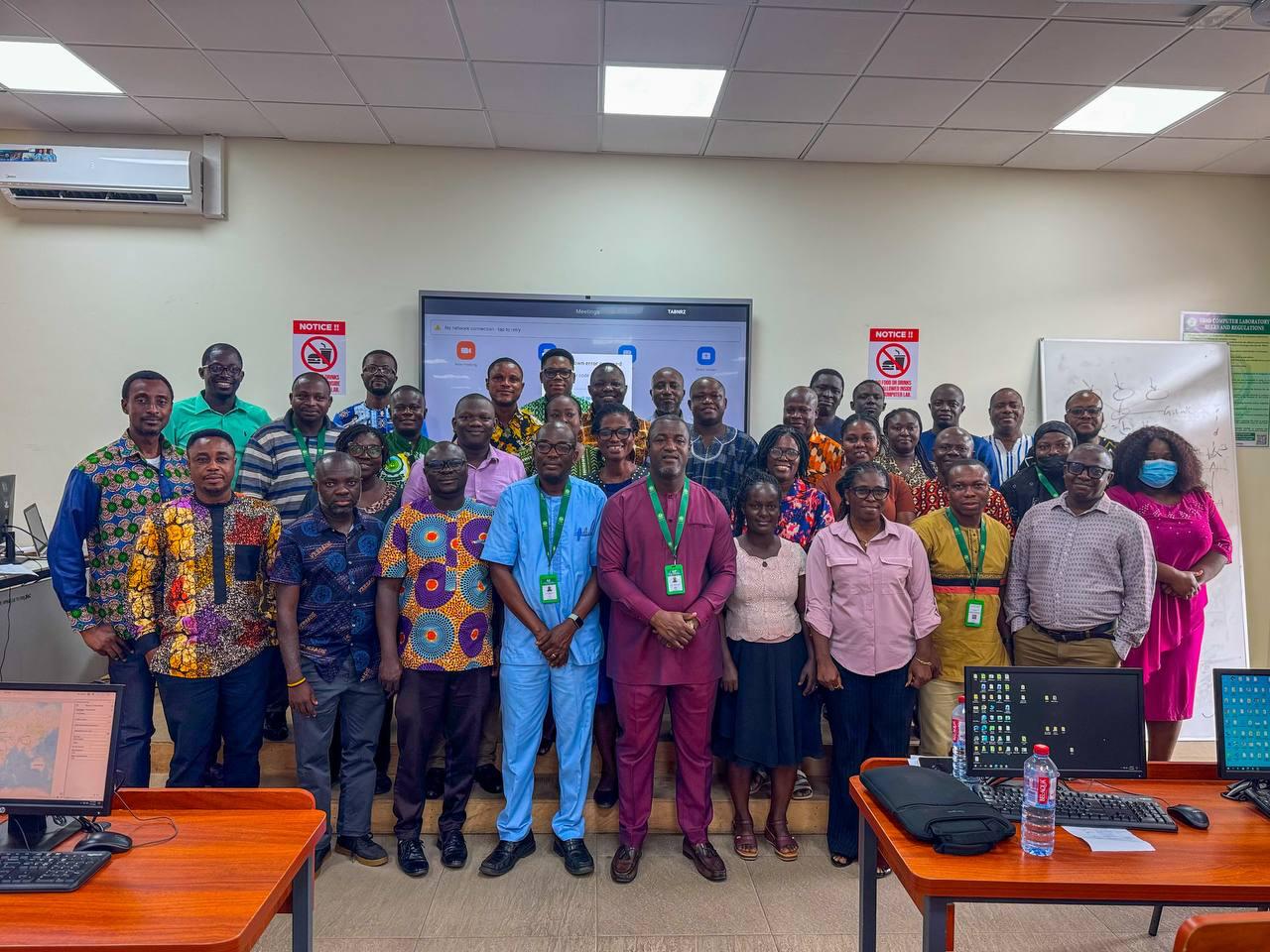
The University of Environment and Sustainable Development (UESD), Somanya, Eastern Region, has reaffirmed its commitment to academic excellence by equipping faculty members with practical knowledge on promotion and career progression through a Capacity-Building Workshop on Academic Promotion and Assessment Processes.
The workshop, jointly organised by the School of Sustainable Development (SSD) and the School of Natural and Environmental Sciences (SNES), brought together academic staff at the University’s Auditorium, Multipurpose Building, to deepen their understanding of promotion requirements, assessment procedures, and strategies for building successful academic careers. It forms part of UESD’s broader strategy to nurture a culture of academic excellence by empowering faculty members with the knowledge, skills, and confidence needed to advance their careers while contributing meaningfully to research, innovation, quality teaching, and sustainable national development.


Opening the workshop, the Dean of the School of Natural and Environmental Sciences, Prof. Shine Francis Gbedemah, said the initiative was designed to demystify the University’s promotion and assessment processes and to prepare faculty members for career advancement.
He noted that continuous professional development is essential to building a vibrant academic community capable of excelling in teaching, research, leadership, innovation, and community service. “By investing in the professional growth of our academic staff, we are strengthening the University’s capacity to compete nationally and internationally,” he said, encouraging participants to take advantage of development opportunities and collaborate with colleagues to enhance their academic profiles.
Delivering the keynote address on “Promotion Practices Across Ghanaian and International Universities: A Comparative Perspective,” by Engr. Prof. Mike Agbesi Acheampong, adjunct Professor, Department of Water Resources and Aquaculture Management, UESD, described academic promotion as a structured, transparent, and merit-based process that requires deliberate planning throughout an academic career. Drawing on his experience in University governance, Prof. Acheampong explained that promotion is assessed through excellence in teaching, research productivity, institutional service, leadership, professional engagement, and community impact.
He advised academics to familiarise themselves with both the Ghana Tertiary Education Commission (GTEC) promotion framework and their institution’s specific promotion guidelines, stressing that promotion preparation should begin from the earliest stages of an academic career rather than when one becomes eligible.
Prof. Acheampong further encouraged faculty members to maintain comprehensive records of their achievements, publish consistently in reputable indexed journals, pursue research collaborations, secure research funding, participate in conferences, and actively contribute to institutional and community development.
He cautioned against practices that could undermine promotion applications, including inadequate documentation, publishing in predatory journals, relying on unofficial information, and submitting weak promotion portfolios. According to him, mentorship, ethical research practices, and strategic career planning remain indispensable to academic success.
The Dean of the School of Sustainable Development, Prof. Anthony Amoah, also guided participants through UESD’s Academic Promotion Framework, providing practical insights into the University’s promotion criteria, procedures, and expectations.
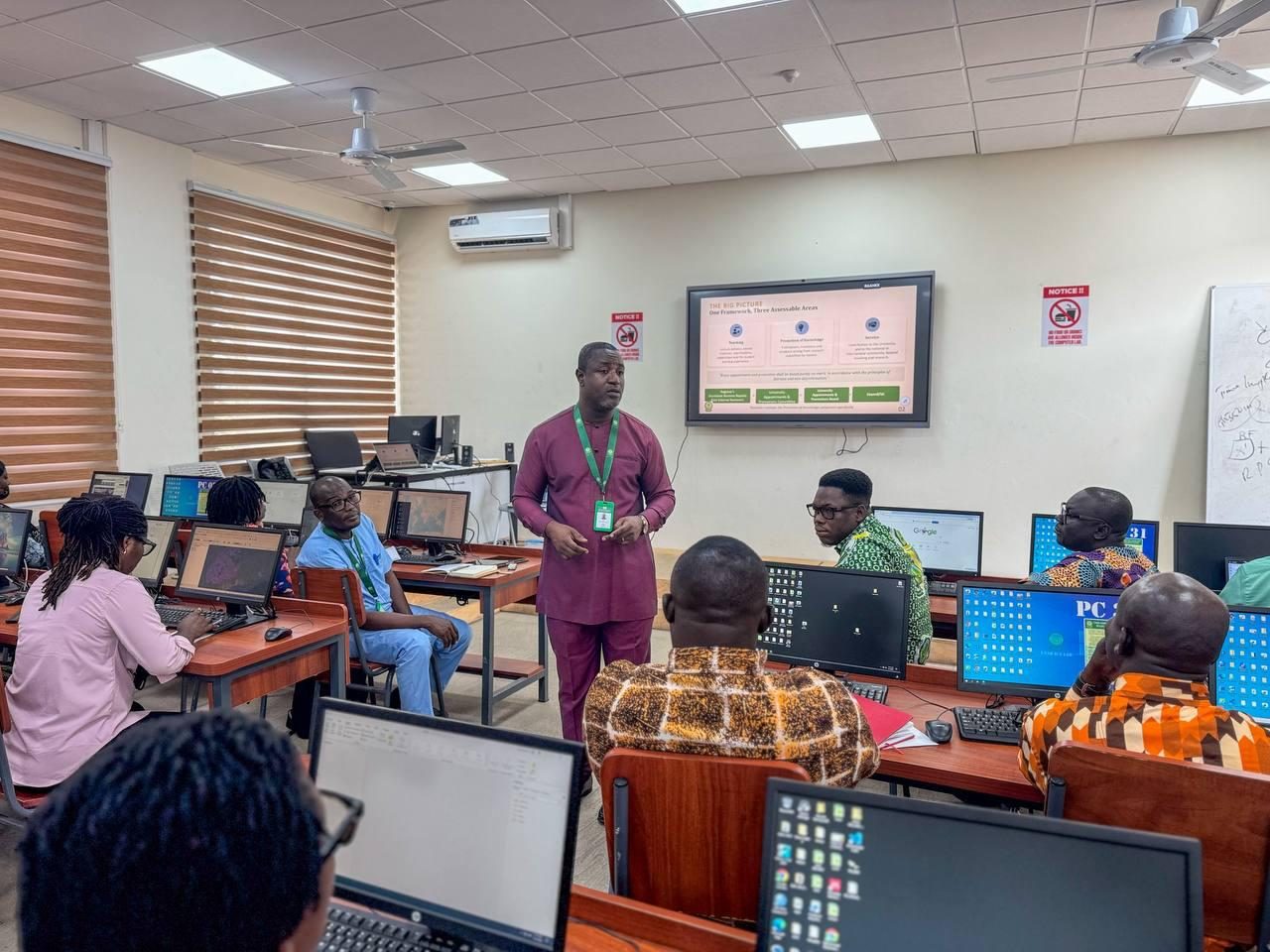

Sharing lessons from his own academic journey, Prof. Amoah urged younger faculty members to begin preparing their promotion portfolios early by developing strong publication records, engaging in impactful research, and seeking mentorship from experienced academics.
He emphasised that the quality and impact of scholarly publications carry greater weight than the number of papers submitted, advising academics to focus on producing high-quality research that advances knowledge and addresses societal challenges. Prof. Amoah also explained the University’s promotion process, outlining the roles of Departments, School Appointments and Promotions Committees, the University Appointments and Promotions Committee (UAPC), external assessors, the Registrar, and the Vice-Chancellor in ensuring a rigorous, transparent, and fair assessment process.
Addressing concerns raised by participants, he noted that external assessment often results in delays due to the thorough review process and the availability of qualified assessors. He assured staff that approved promotions are backdated to ensure successful applicants receive all corresponding benefits. Participants sought clarification on publication standards, authorship requirements, external assessment procedures, promotion timelines, and documentation of academic achievements.
Prof. Amoah further encouraged faculty members to familiarise themselves with promotion requirements relating to publications, authorship, teaching effectiveness, research impact, and institutional service, while using established academic governance structures to propose improvements to promotion policies where necessary.