By Prof. Edward Wiafe Debrah
-Environmentalist
Pro Vice-Chancellor, University of Environment and Sustainable Development (UESD), Ghana
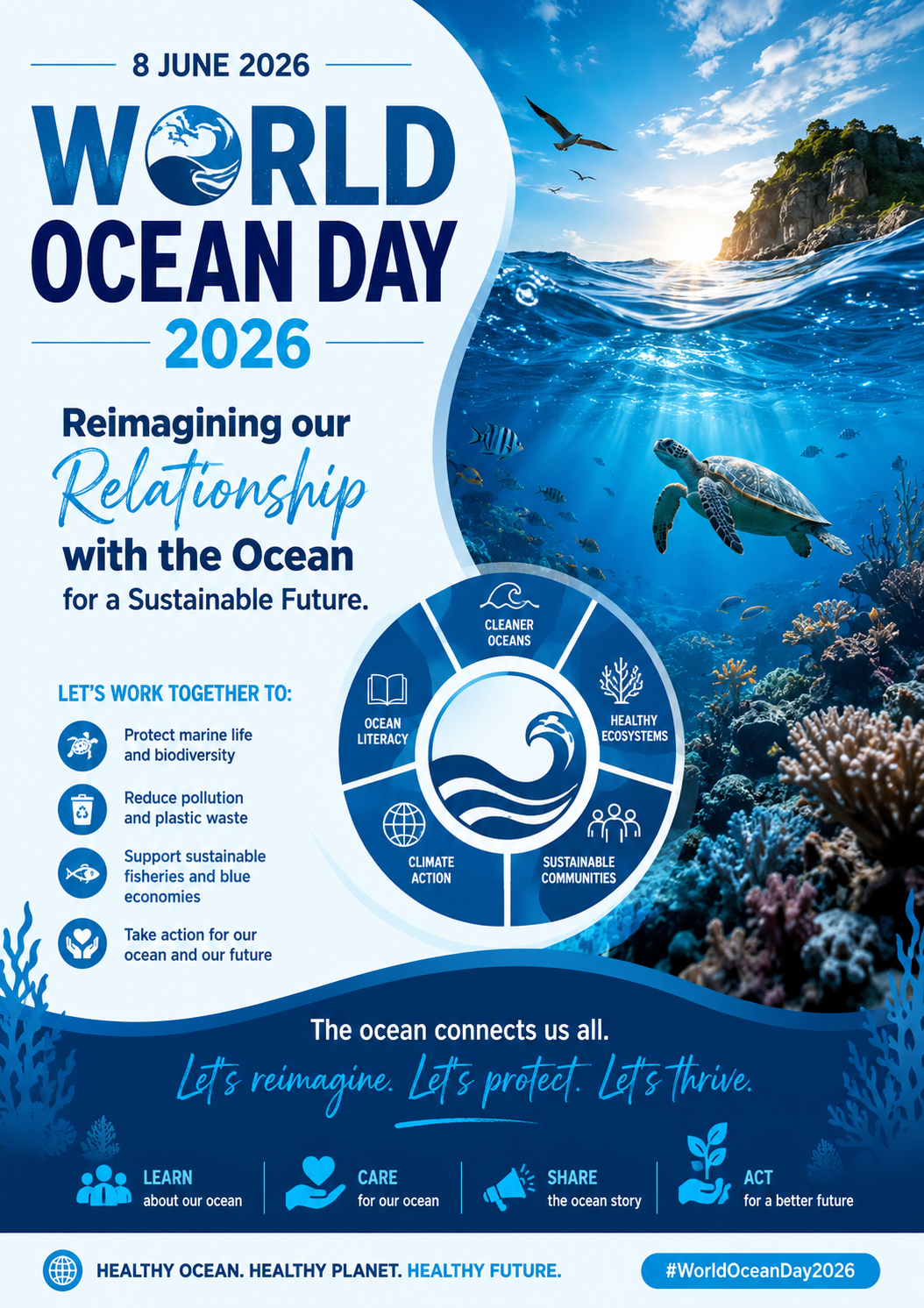
On 8th June each year, the world pauses to celebrate World Ocean Day, a global observance dedicated to recognizing the immense importance of our oceans and mobilizing action to protect them. This year’s United Nations theme, “Reimagine: Beyond the World We Know, A New Relationship with Our Ocean,” challenges humanity to rethink how we interact with the marine environment. Complementing this is the World Ocean Day Action Theme: “Strong Marine Protected Areas for a Blue Planet.”
These themes are both timely and relevant, particularly for countries like Ghana whose social, economic, and environmental well-being are closely linked to the health of the ocean.
The Ocean: The Lifeblood of Our Planet
The ocean covers more than 70 % of the Earth’s surface and produces over half of the oxygen we breathe. It regulates the global climate, absorbs vast amounts of carbon dioxide, supports biodiversity, provides food and livelihoods for billions of people, and facilitates international trade.
For Ghana, the Atlantic Ocean is central to national development. Coastal communities depend on marine resources for fishing, tourism, transportation, and employment. Fish remains one of the most important sources of animal protein for millions of Ghanaians, while marine ecosystems support livelihoods along our entire coastline.
Yet, despite its immense value, the ocean continues to face unprecedented threats from human activities.
Reimagining Our Relationship with the Ocean
The theme “Reimagine: Beyond the World We Know, A New Relationship with Our Ocean” invites us to move beyond viewing the ocean merely as a resource to be exploited. Instead, it calls for a relationship built on stewardship, sustainability, respect, and shared responsibility.
For decades, economic development has often been pursued at the expense of marine ecosystems. Coastal habitats have been degraded, fish stocks overexploited, wetlands destroyed, and pollution allowed to accumulate. The result is declining marine biodiversity, reduced fisheries productivity, increased coastal vulnerability, and worsening environmental degradation.
Reimagining our relationship with the ocean means recognizing that the health of the ocean and the well-being of humanity are inseparable. A healthy ocean is essential for climate resilience, food security, economic prosperity, and sustainable development.
The Growing Threat of Plastic Pollution
One of the greatest environmental challenges confronting oceans worldwide today is plastic pollution. Every year, millions of tonnes of plastic waste enter rivers, lakes, estuaries, and oceans.
In Ghana, plastic pollution has become a major environmental concern. Large quantities of plastic waste are improperly disposed of in communities, markets, drainage systems, and open spaces. During rainfall events, these plastics are washed into streams, rivers, lagoons, and eventually into the sea.
The consequences are severe.
Marine animals, including fish, turtles, seabirds, and other wildlife, often mistake plastic debris for food. Ingested plastics can cause injury, starvation, suffocation, and death. Plastic waste also damages coastal habitats, entangles marine organisms, and introduces toxic substances into aquatic ecosystems.
Microplastics (tiny plastic particles resulting from the breakdown of larger plastics) have now been detected in oceans, fish, drinking water, and even human bodies. This raises serious concerns about public health and food safety.
Plastic pollution is not merely an environmental issue; it is also a social and economic challenge that affects tourism, fisheries, public health, and community well-being.
Ghana’s Rivers: Pathways of Pollution
Before plastics reach the ocean, they often travel through rivers and streams. Many of Ghana’s water bodies have increasingly become conduits for waste disposal.
Rivers such as the Odaw, Korle Lagoon, Pra, Birim, Densu, and Ankobra receive substantial quantities of plastic waste and other pollutants. In urban areas, indiscriminate dumping of refuse into drains contributes significantly to flooding, particularly in Accra and other major cities.
The annual flooding experienced in parts of Accra is not solely a consequence of heavy rainfall. Blocked drains filled with plastic waste reduce water flow, causing floodwaters to accumulate and overflow into communities. The environmental damage caused by plastic pollution therefore extends beyond the ocean and directly affects human settlements and livelihoods.
Strong Marine Protected Areas for a Blue Planet
The 2026 World Ocean Day Action Theme emphasizes the importance of Strong Marine Protected Areas (MPAs).
Marine Protected Areas are designated zones where marine ecosystems receive legal protection from harmful activities such as overfishing, habitat destruction, and pollution. Well-managed MPAs help restore fish populations, conserve biodiversity, protect breeding grounds, and enhance ecosystem resilience.
For Ghana, strengthening marine conservation efforts presents an opportunity to rebuild declining fish stocks, protect coastal biodiversity, and support sustainable livelihoods for future generations.
Marine protected areas are not barriers to development. Rather, they are investments in long-term ecological and economic sustainability.
What Ghana Must Do
Addressing marine pollution and protecting ocean health requires coordinated action at multiple levels.
Government institutions must strengthen environmental law enforcement, improve waste management systems, invest in recycling infrastructure, and support marine conservation initiatives.
Metropolitan, Municipal, and District Assemblies must prioritize effective waste collection and sanitation management. The private sector should reduce unnecessary plastic packaging and embrace circular economy principles that promote reuse and recycling.
Educational institutions should integrate ocean literacy and environmental stewardship into learning programmes, while civil society organizations continue to raise awareness and mobilize communities for action.
Most importantly, citizens must take responsibility for their daily actions. Refusing single-use plastics where possible, properly disposing of waste, participating in clean-up campaigns, and protecting local water bodies are practical steps that every individual can undertake.
The Role of Science and Innovation
Science and innovation will play a critical role in achieving a sustainable blue future. Research institutions and universities must continue generating knowledge on marine ecosystems, pollution control, sustainable fisheries, climate adaptation, and coastal resource management.
Innovative approaches to plastic recycling, waste-to-resource technologies, biodegradable alternatives, and ecosystem restoration can help transform environmental challenges into opportunities for sustainable development.
A Call to Action
As we commemorate World Ocean Day 2026, let us recognize that the future of our oceans depends on the choices we make today.
The ocean is not an endless dumping ground. It is a living system that sustains life on Earth. Protecting it requires a fundamental shift in attitudes, behaviours, and policies.
Let us reimagine our relationship with the ocean. Let us invest in strong marine protected areas. Let us stop plastic pollution at its source. Let us restore our rivers, protect our coastlines, and safeguard marine biodiversity.
The ocean connects us all. By protecting it today, we secure a healthier, more prosperous, and more resilient future for Ghana, Africa, and the world.
Happy World Ocean Day 2026.
“Reimagine: Beyond the World We Know, A New Relationship with Our Ocean.”