
By: Professor Edward Wiafe Debrah, Environmentalist
Pro Vice-Chancellor, University of Environment and Sustainable Development (UESD)
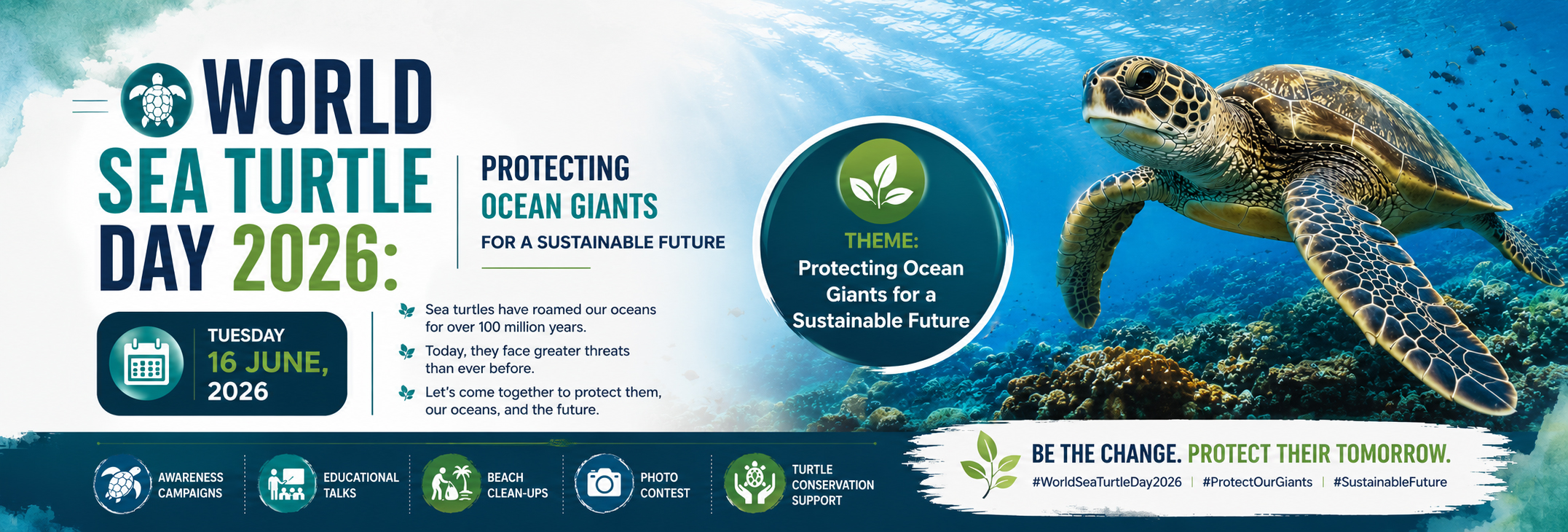
Every year on 16th June, the world observes World Sea Turtle Day to celebrate one of the ocean’s oldest and most remarkable creatures while drawing attention to the urgent need for their conservation. The 2026 commemoration reminds us that sea turtles, often referred to as the “ocean giants” or “ancient mariners,” have survived for more than 100 million years but are now facing unprecedented threats largely driven by human activities.
Ghana is privileged to host important nesting and foraging habitats for several species of sea turtles, including the Green Turtle (Chelonia mydas), Leatherback Turtle (Dermochelys coriacea), Olive Ridley Turtle (Lepidochelys olivacea), and Hawksbill Turtle (Eretmochelys imbricata). Nesting beaches stretch along much of the country’s coastline, from the Volta Region through the Greater Accra, Central, and Western Regions. These species are not only ecologically important but also contribute significantly to marine ecosystem health by maintaining seagrass beds, controlling jellyfish populations, and supporting nutrient cycling in coastal environments.
Despite their ecological importance, sea turtles in Ghana face numerous human-induced threats that continue to reduce their populations and threaten their long-term survival.
One of the most persistent threats is the illegal capture of adult turtles and the collection of eggs from nesting beaches. In some coastal communities, turtle meat and eggs are consumed as delicacies or sold for income despite legal protection. This practice directly reduces reproductive success and accelerates population decline.
Sea turtles are frequently caught accidentally in fishing gear, including trawl nets, drift nets, longlines, and gillnets. Many drown because they are unable to reach the surface to breathe, while others suffer severe injuries before being released or discarded.
Rapid urbanization, tourism infrastructure, sea defence projects, sand winning, and unplanned coastal development have resulted in the destruction and degradation of nesting beaches. Artificial lighting from beachfront developments can disorient hatchlings, causing them to crawl inland instead of toward the sea, where many die from dehydration or predation.
Plastic waste has become one of the greatest threats to marine turtles worldwide, and Ghana is no exception. Plastic bags floating in seawater resemble jellyfish, a preferred food source for leatherback turtles. When ingested, plastics block the digestive system, leading to starvation, internal injuries, or death. Discarded fishing lines and abandoned nets also entangle turtles, restricting movement and causing drowning.
The discharge of untreated sewage, industrial effluents, agricultural runoff, and oil pollutants into rivers and coastal waters degrades marine habitats and affects turtle health. Contaminated environments also reduce the abundance of prey species and alter critical feeding grounds.
Climate change poses an emerging threat through sea-level rise, coastal erosion, and increasing sand temperatures. Because the sex of turtle hatchlings is determined by nest temperature, excessive warming can produce highly skewed sex ratios, threatening future population viability. More frequent storms also destroy nests and accelerate beach erosion.
Vehicles driven on beaches compact sand and crush buried nests, while uncontrolled tourism and recreational activities disturb nesting females and emerging hatchlings. Noise and excessive human presence can discourage turtles from nesting altogether.
Protecting sea turtles requires coordinated action by government agencies, coastal communities, researchers, non-governmental organizations, and the general public. Several practical measures can significantly improve conservation outcomes.
1. Strengthen Law Enforcement
Existing wildlife protection laws should be rigorously enforced to prevent the illegal harvesting and trade of turtles and their eggs. Regular patrols should be intensified during nesting seasons.
2. Protect and Restore Nesting Beaches
Critical nesting habitats should be designated and managed as protected coastal zones. Sand mining, uncontrolled development, and destructive activities should be prohibited in these areas, while degraded beaches should be restored through ecosystem-based approaches.
3. Promote Sustainable Fisheries
Fishers should be encouraged to adopt turtle-friendly fishing practices, including the use of Turtle Excluder Devices (TEDs) in trawl fisheries and improved gear designs that reduce accidental capture. Awareness campaigns can also promote the safe release of accidentally captured turtles.
4. Combat Plastic Pollution
Reducing plastic waste entering rivers and oceans should become a national priority. Improved waste management systems, recycling initiatives, public education, and restrictions on single-use plastics can significantly reduce marine pollution and its impacts on turtles.
5. Community-Based Conservation
Local fishing and coastal communities should be actively involved in turtle monitoring, nest protection, and ecotourism initiatives. Incentive-based conservation programmes can transform former turtle harvesters into custodians of these endangered species while creating alternative livelihood opportunities.
6. Environmental Education
Schools, universities, media organizations, and civil society should intensify public education on the ecological importance of sea turtles and the consequences of their decline. Conservation messages should particularly target young people, who represent the future stewards of Ghana’s marine resources.
7. Scientific Research and Monitoring
Long-term monitoring of nesting beaches, migration routes, and population trends is essential for evidence-based conservation. Universities and research institutions should collaborate with government agencies and international partners to generate data that inform policy and management decisions.
8. Climate Change Adaptation
Nature-based coastal protection measures, such as mangrove restoration and dune conservation, can enhance the resilience of nesting habitats while simultaneously protecting coastal communities from erosion and storm surges.
A National Call to Action
World Sea Turtle Day 2026 provides an opportunity for Ghanaians to reflect on our shared responsibility to protect these extraordinary marine reptiles. Their survival depends not only on government policies but also on the everyday actions of individuals, disposing of waste responsibly, supporting sustainable fisheries, protecting nesting beaches, and reporting illegal activities.
Sea turtles have traversed our oceans for millions of years, surviving natural disasters and climatic shifts. It would be a tragedy if they disappeared because of preventable human actions. By working together, Ghana can secure a future where these magnificent ocean giants continue to grace our shores, enrich our marine ecosystems, and inspire future generations.
Protecting sea turtles is not merely about saving a species; it is about safeguarding the health, productivity, and sustainability of our oceans for the benefit of humanity and the planet.