The University of Environment and Sustainable Development (UESD) is a member of the YEMAYA collaboration project, which is a collaboration with six (6) universities, including the University TU Bergakadamie, Freiberg (TUBAF) in Germany, the University of Mines and Technology (UMaT) in Ghana, Taita Tavita and Machakos Universities in Kenya and Nsukka University in Nigeria. The programme supports women in science to engage in research and knowledge sharing in their disciplines. The project aims to empower female doctoral researchers in Science, Technology, Engineering and Mathematics (STEM) by providing international research training, leadership development and opportunities for collaboration to address pressing environmental challenges, particularly those affecting mining communities. UESD continues to strengthen its commitment to research excellence and sustainable development through its active participation in the YEMAYA Project, an Erasmus+ initiative under the Consortium for Sustainable Development in Africa (CoSuDAf).
UESD officially joined the project during the inaugural YEMAYA coordination meeting held on 23rd October 2023. The meeting brought together partner institutions to launch the research traineeship programme, explore funding opportunities, and strengthen long-term academic collaboration.
Three faculty members from UESD participated in a partnership visit to Germany from June 17 to July 1, 2025. The team had the opportunity to listen to lectures from the Vice Rector of the University TU Bergakadamie, who spoke about the university’s use of innovative methods for resource exploration and in geoscience monitoring. Coordinators from the various universities also presented an update on each university’s progress on the YEMAYA project. The theme for the UESD project is ‘Restoring degraded mined lands and enhancing livelihood options for mined communities in Ghana’. The objectives include:
It was established that the partnership activities of the universities should go beyond participating in the YEMAYA research, and engage in other activities that can enhance research, teaching, and livelihoods of communities. The team participated in another lecture from SAXEED, which is a network of four universities, and their duties include motivating academic staff, students and graduates with their start-up ideas and helping them with sources of funds. They help them from the exploration stage through incubation to growth. The lesson is for partner universities to establish centres that can support staff and students to come up with product-based research and support them to grow their business ideas.
Team members had discussions on the need to support spin-offs at the universities and how to support them. Among the importance of supporting spin-offs, members mentioned that it can enhance opportunities for entrepreneurship, development of products from research findings, incentivise researchers, promote solution-based research, and enhance the establishment of incubator hubs in universities. Some universities indicated that they already have incubator hubs for students, engage in competitive drive support, help students through registration and patenting, provide training and mentoring, and engage in exhibition fairs. Most of the discussions centred on how to develop the entrepreneurial skills of students and developing courses as well as research that can help build the entrepreneurial skills of students, training students to become reflective, critical and systematic thinkers, creating a learning atmosphere that can help students to overcome fears and creating a generation of change makers. The lesson was for partner universities to create similar ideas in their universities.
The workshop also included training on professional communication. Participants were informed about the need to reflect on themselves, get to know themselves and build potential in working in a team. The professional communication lectures were delivered by a member of the communication centre of the university. They train students to communicate about their ideas and products, provide leadership skills training, including self-leadership and leading others. They also engage students in different kinds of projects and guide them to build innovative ideas, provide them with tasks that can help bring their reflective ideas and reduce their dependence on artificial intelligence (AI).
Participants again listened to a lecture on education in times of disruptive changes: The perspective from a German. The lecture concentrated on the need to educate young leaders with the necessary mindset to create paradigmatic shit in societies in times of disruptive changes, creating programmes in the universities that can cater for the future including programmes on circular economy, biodiversity regeneration, decarbonisation, clean energy issues among others. Members were exposed to the skills and mindset required by students to shift from the industrial age to the knowledge age. These include creativity, understanding context, thinking outside the box to create better common roles, creating eco-intelligence skills, developing a collaborative mindset where diversity is seen and valued, emotional intelligence, problem-based learning, challenge-based learning, gamification and flipped classroom concepts.
The team also had the chance to visit some Professors at their offices and their laboratories. The UESD team met Professor Bongaert, who presented a lecture on licensing, expectation and stakeholder management of compensation for BergsLaden: Damages from mining. This was based on Germany’s regulation on payment for damages caused by mining. The team also visited the UESD candidate (Henrietta Nabiebakye), who is currently doing her laboratory work as part of the YEMAYA Erasmus project. She explained to the team the processes she has used to test her soil and plant samples. She was praised for her ability to master the laboratory work despite the fact that she has a social science background.
The team visited a German Institution that deals with mining explorations called Helmholz Institute, whose aim is to improve resource and energy efficiency and become a key enabler for a sustainable circular economy. They hope to achieve this by developing innovative technologies, collaborating with stakeholders and decision makers. They also link with societies, industries and educational institutions. The team again participated in a lecture delivered by Sabrina Hendrich on treating wastewater from mining sites and bioleaching technology. An innovative technology where living organisms are used to mine minerals. The microorganisms are indigenous to the area.
The team also visited a mining site to learn about their operations. They went to the underground mine with a depth of 147metres. The team was thrilled to observe a bio-mining set-up using bio-leaching technology.
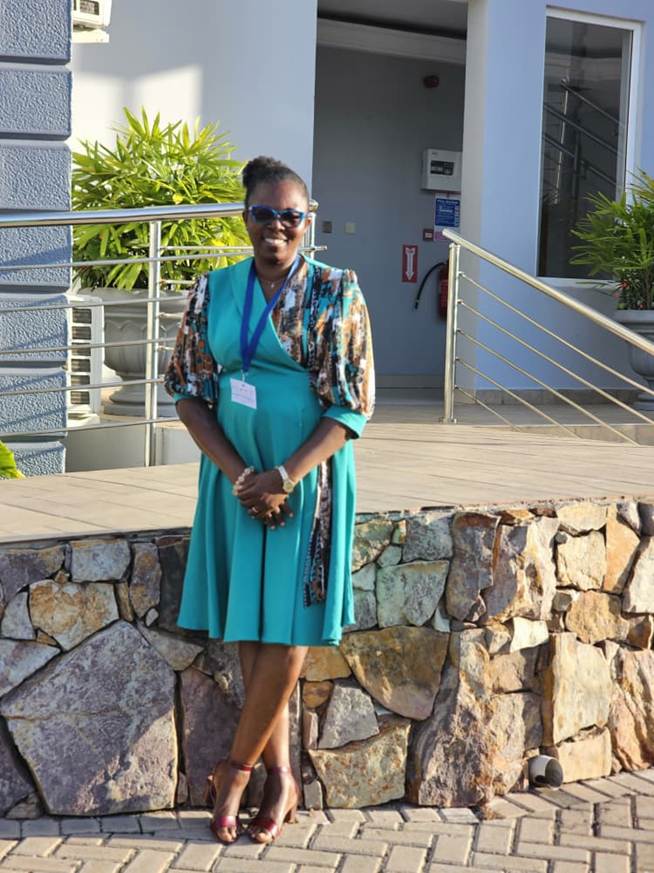
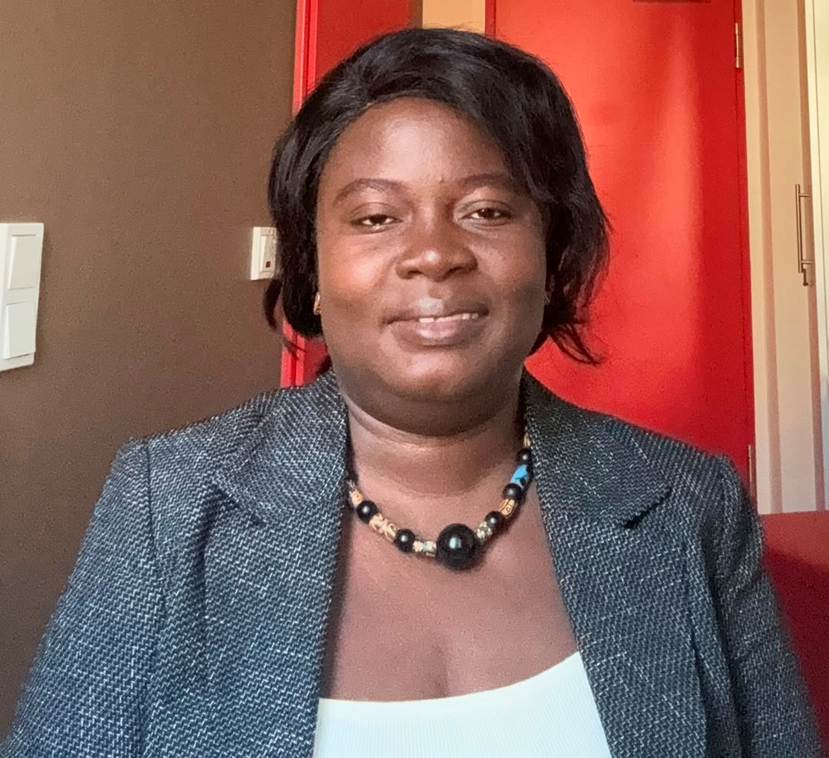
Since joining the project, UESD has supported three female doctoral researchers: Bernice Araba Otoo, Henrietta Ngmentoma Nabiebakye, and Esther Odoi-Darko. Through the YEMAYA research traineeship programme, these researchers have enhanced their scientific expertise, leadership skills and international networks while contributing to innovative research on sustainable mining and environmental restoration.
Bernice Araba Otoo
Bernice Araba Otoo was the first UESD researcher to participate in the six-month YEMAYA Research Traineeship at TU Bergakademie Freiberg, Germany, from 1 April to 30 September 2024. She was affiliated with the Institute of Flow and Transport Modelling in the Geosphere (Faculty 3) under the supervision of Prof. Conrad Jackisch.
Her research focused on assessing heavy metal contamination and soil fertility in mining-affected communities within the Atiwa West District of Ghana. Using advanced analytical techniques, including X-ray Fluorescence (XRF) and Fourier Transform Infrared Spectroscopy (FTIR), she evaluated the environmental impacts of mining activities. The findings revealed moderate heavy metal contamination alongside nutrient deficiencies in mining-affected soils, highlighting the urgent need for sustainable land restoration strategies.
Beyond her research, Bernice broadened her expertise in environmental geotechnics, waste management, Geographic Information Systems (GIS), scientific leadership and intercultural collaboration. She participated in weekly leadership programmes organised by the Graduate Academy (GRAFA) and attended the 8th Freiberg PhD Conference, where she expanded her scientific knowledge and professional network.
As part of the Project of Hope, Bernice presented an innovative initiative titled “Turning Trash into Homes: Building with Recycled Plastics,” demonstrating how plastic waste can be converted into affordable and environmentally sustainable building materials while helping to address plastic pollution.
Following her return to Ghana, Bernice successfully completed her doctoral coursework and continued field investigations for her PhD research while writing her thesis. She presented a research poster at the 5th Sustainable Development Conference hosted by UESD (4–6 September 2025) and delivered a virtual oral presentation at the 5th CEMEREM Biennial International Conference held at Taita Taveta University, Kenya (30 September–1 October 2025). Her work undertaken during the traineeship also resulted in a conference publication.
She has remained actively engaged in YEMAYA activities, participating in webinars, the DAAD Alumni Seminar in Takoradi, and the recent YEMAYA International Summer School hosted by UMAT, Tarkwa.
Bernice is currently expanding her doctoral research by investigating nature-based solutions for restoring degraded mining lands and improving agricultural productivity. Greenhouse experiments evaluating suitable organic soil amendments are currently underway. In addition to her research, she supports laboratory activities and mentors undergraduate and postgraduate students, contributing significantly to research capacity development at UESD.

Bernice Araba Otoo
Henrietta Ngmentoma Nabiebakye
Henrietta Ngmentoma Nabiebakye undertook her YEMAYA Research Traineeship at TU Bergakademie Freiberg, Germany, from 11 April to 29 September 2025. She was affiliated with the Institute of Biosciences under the supervision of Prof. Dr. Karin Glaser.
During her research stay, Henrietta completed advanced courses in Reclamation and Biometallurgy, strengthening her understanding of sustainable mining, environmental restoration and biological approaches to mineral processing. She also attended the 9th Freiberg PhD Conference, several mining seminars, and the weekly GRAFA leadership programme, gaining exposure to emerging research, innovative technologies and valuable international networking opportunities.
In the laboratory, she carried out physicochemical and heavy metal analyses of soil and plant samples, significantly enhancing her practical skills in environmental sample preparation, laboratory analysis and data interpretation. Due to limited access to ICP-OES instrumentation, she utilised X-ray Fluorescence (XRF) for elemental analysis, gaining valuable hands-on experience in sample preparation, instrument operation and interpretation of environmental geochemical data.
As part of the Project of Hope, Henrietta delivered a presentation highlighting the economic importance of shea butter and dawadawa, with particular emphasis on innovative approaches for converting processing waste into valuable products that enhance livelihoods while promoting sustainable resource utilisation.
Since returning to Ghana, Henrietta has continued her doctoral research on crop-based remediation of abandoned mine sites to promote land restoration and food security. She has conducted extensive soil and plant analyses and has progressed her doctoral thesis to approximately 70% completion.
In addition to her research, Henrietta has prepared scientific manuscripts, with one paper currently under peer review. She continues to participate in YEMAYA webinars and conferences while supporting laboratory activities and mentoring students. Through these contributions, she continues to strengthen research, teaching and environmental sustainability initiatives at UESD.

Henrietta Ngmentoma Nabiebakye
Esther Odoi-Darko
Esther Odoi-Darko is the third UESD doctoral researcher to participate in the YEMAYA Research Traineeship. She is currently undertaking her research stay at TU Bergakademie Freiberg, Germany, from 23 April to 30 September 2026, where she is affiliated with the Institute of Surface Mining and Rehabilitation under the supervision of Dr. Nils Hoth.
Her doctoral research investigates heavy metal contamination, bioavailability and associated human health risks in water and sediments from mining-impacted fish farms in the Eastern Region of Ghana.
During her traineeship, Esther has conducted physicochemical analyses of water samples, XRF analyses of sediment samples and heavy metal determination using Microwave Plasma–Atomic Emission Spectroscopy (MP-AES). She has also completed advanced coursework in Mine Water Treatment and Groundwater Chemistry, further strengthening her expertise in environmental monitoring and mine water management.
Esther actively participates in institute seminars, research presentations and GRAFA leadership programmes, developing valuable skills in project management, intercultural communication and scientific leadership. As part of the Project of Hope, she presented “Breaking Barriers, Building Futures: Empowering Young Girls through Education, Leadership, and Economic Independence,” reflecting her commitment to integrating scientific research with community empowerment.
Within the institute, she has delivered two research seminars on the progress of her doctoral work. She has also contributed to research on the pre-treatment of mine water prior to ion-exchange chromatography for the recovery of copper and cobalt, broadening her expertise in sustainable resource recovery and mine water treatment technologies.
Building Research Capacity at UESD
The achievements of Bernice Araba Otoo, Henrietta Ngmentoma Nabiebakye and Esther Odoi-Darko clearly demonstrate the transformative impact of the YEMAYA Project on research excellence at UESD.
Through advanced scientific training, international research collaborations, conference participation, scholarly publications, leadership development and student mentorship, these researchers are helping to address critical environmental challenges associated with mining while contributing to sustainable development in Ghana and beyond.
Their accomplishments reflect UESD’s growing international research profile and reaffirm the University’s commitment to producing globally competitive researchers whose work advances environmental sustainability, innovation and community development across Africa.

Esther Odoi-Darko