
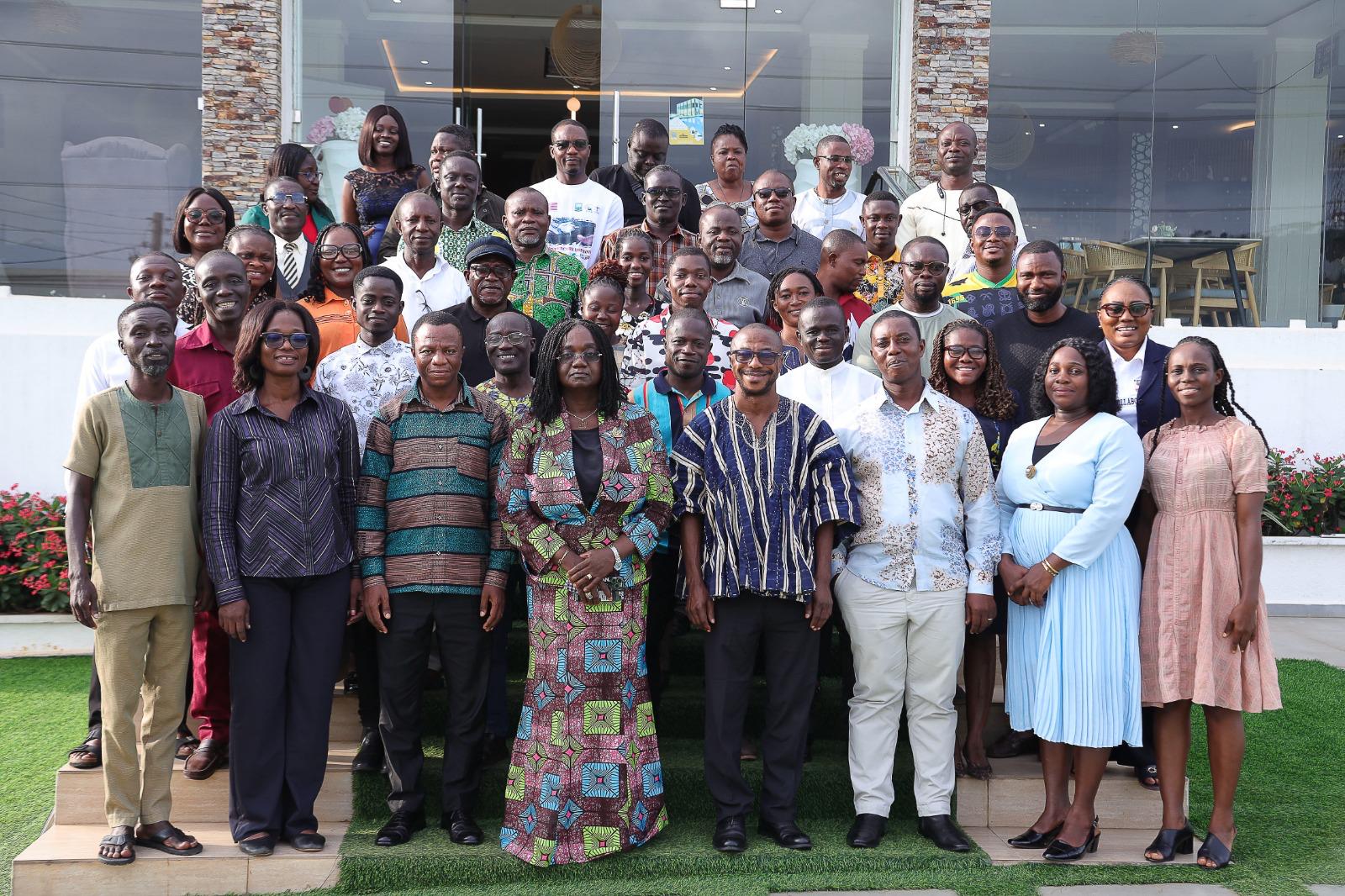
The University of Environment and Sustainable Development (UESD), Somanya, Eastern Region is to introduce a Diploma Programme in Environmental Communication under the Nkabom Collaborative Project, to equip journalists and communication professionals with specialised knowledge and skills in environmental and sustainability reporting.
The announcement was made by the Vice-Chancellor of the University and Project Investigator of the Nkabom Collaborative-UESD, Professor Eric Nyarko-Sampson, at the closing ceremony of a two-day capacity-building workshop in Koforidua for members of the Ghana Journalists Association (GJA), Eastern Region. It was attended by journalists from radio, television, print, freelance, and online media across the Region to deepen their understanding of environmental reporting and the University’s green innovation agenda.
The workshop, held under the theme “Reporting Green Innovation: Strengthening Media Engagement for Sustainable Development,” was organised by the Nkabom Collaborative-UESD in collaboration with McGill University, with support from the Mastercard Foundation. The sessions were facilitated by the Project Coordinator and Pro Vice-Chancellor of UESD, Professor Edward Wiafe Debrah.
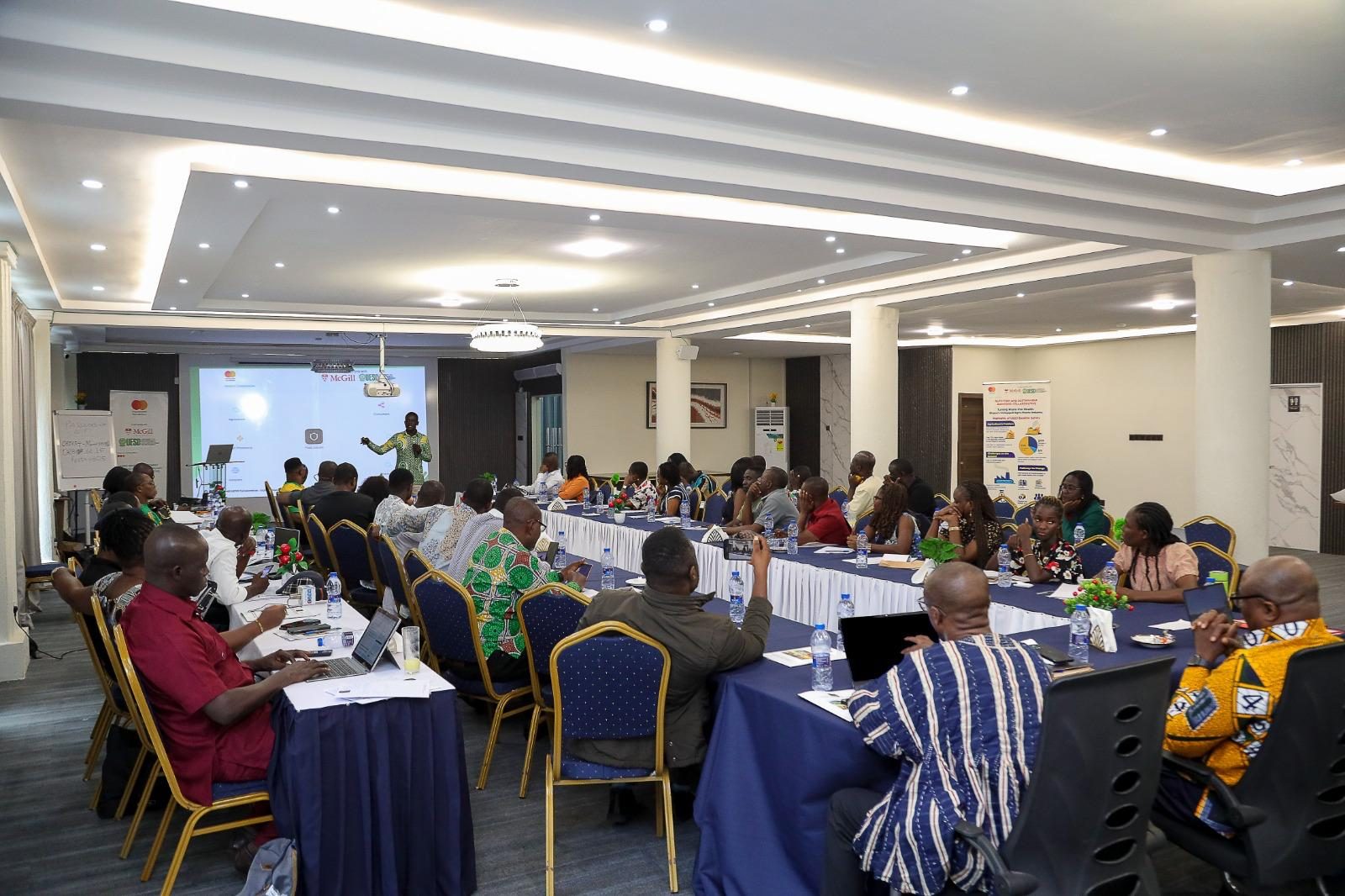
Professor Nyarko-Sampson said, the proposed diploma programme forms part of UESD’s commitment to building the capacity of media professionals to communicate complex environmental and sustainability issues accurately, responsibly, and in ways that inspire public action. He emphasised that journalists are indispensable partners in advancing sustainable development because they bridge the gap between scientific research and society. “The media has the power to translate research and innovation into stories that inform the public, influence policy, and inspire action,” he noted.
The Vice-Chancellor encouraged journalists to move beyond routine event reporting and focus on the human impact of development initiatives by telling compelling stories of young people, women, and vulnerable communities whose lives are being transformed through innovation, entrepreneurship, and sustainable livelihoods.
Over the two days, participants received practical training in Agro-Waste Management and Circular Economy Opportunities, Aquaculture Technology and Sustainable Food Systems, Entrepreneurship and Green Jobs, as well as Communication and Sustainability Reporting. They were also introduced to the objectives and impact of the Nkabom Collaborative Project through presentations delivered by the Pillar Leads: Professor Richard Amfo-Otu, Lead for Agro-Waste Management; Dr. Eunice Stella Nyarko, Entrepreneurship Lead; and Dr. Christian Larbi Ayisi, Aquaculture Lead. The Registrar of UESD and Project Administrator of the Nkabom Collaborative, Mrs. Mary Abena Agyepong, also interacted with participants, reaffirming the University’s commitment to strengthening collaboration with the media in advancing sustainable development.
The training forms part of UESD’s implementation of the Nkabom Collaborative, a multi-institutional partnership involving UESD, Koforidua Technical University, Kwame Nkrumah University of Science and Technology, the University of Ghana, the University of Health and Allied Sciences, Ashesi University, the Association of Ghana Industries, and McGill University, Canada.
Under the project, UESD leads the Agro-Waste Management and Aquaculture Technology Entrepreneurship Initiative, under the Nutrition and Sustainable Agri-Food Collaborative, which seeks to transform agricultural waste into value-added products, promote technology-driven aquaculture, strengthen food security, and create sustainable employment opportunities for young people.
The Eastern Regional Chairman of the GJA, Mr. Stephen Ampem-Darko, described environmental journalism as an essential tool for national development and called on journalists to become champions of sustainable development through accurate, investigative, and solutions-oriented reporting.
He noted that although the Eastern Region is richly endowed with natural resources such as the Volta Lake, Atewa Forest, and productive cocoa farms, it also faces significant environmental challenges, including illegal mining, deforestation, plastic pollution, and climate change. Mr. Ampem-Darko urged journalists to simplify complex environmental issues for the public, hold duty bearers accountable for environmental governance, and consistently highlight innovative solutions that can be replicated across communities.
Reaffirming the Association’s commitment to environmental journalism, he announced plans to promote continuous capacity building, strengthen collaboration with UESD and other stakeholders, and establish a network of Green Reporters in the Eastern Region.
“Colleagues, the pen is powerful. The microphone is powerful. The camera is powerful. But when these tools are focused on the environment, they become instruments of survival,” he said.