
A good idea can start with one person, but turning that idea into a successful enterprise often requires a network of people, knowledge, skills and opportunities.
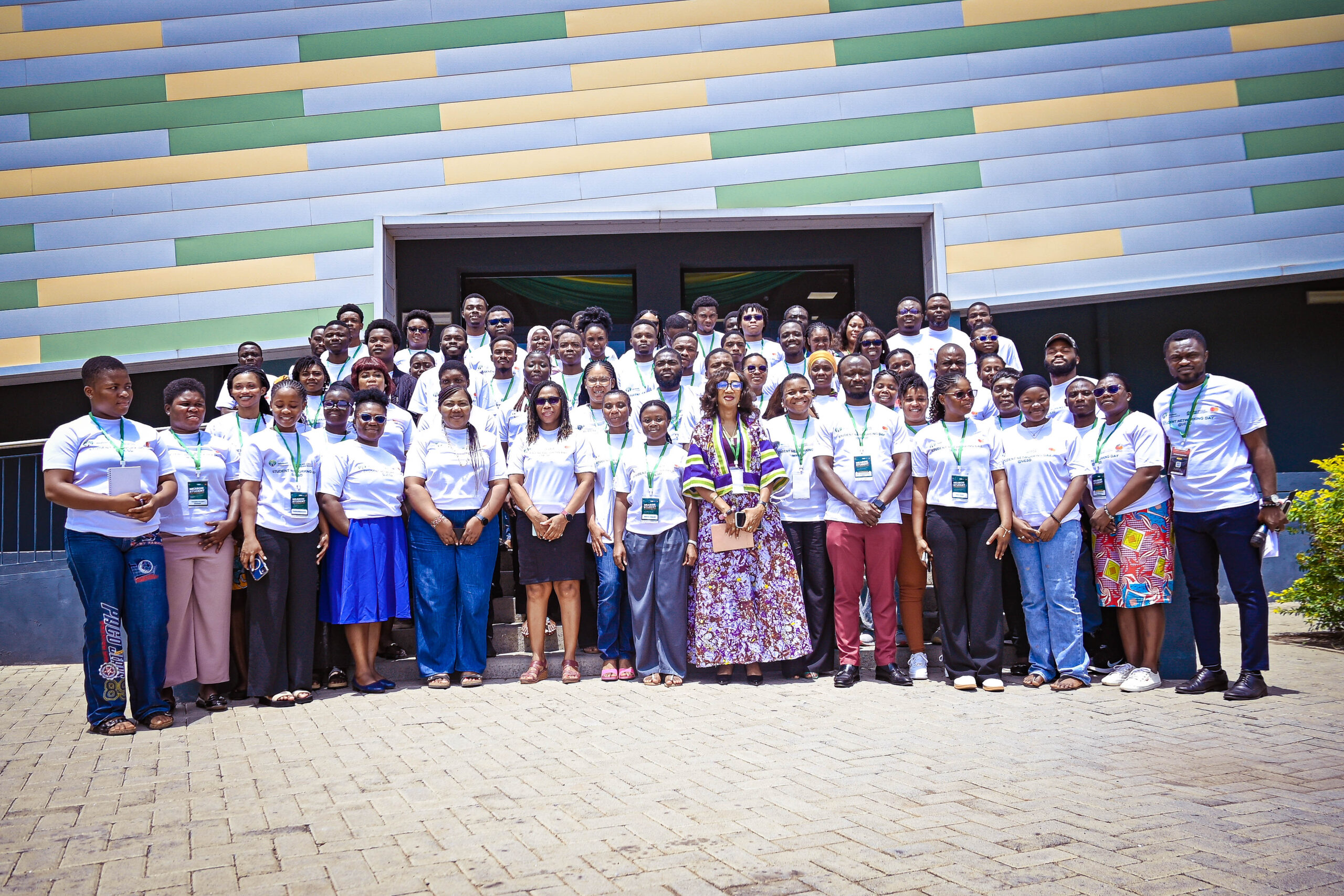
This was the central message of the second Nkabom Student Networking Day, held at the University of Environment and Sustainable Development (UESD), Somanya, Eastern Region.
The event brought together student entrepreneurs from five partner institutions of the Nkabom Collaborative-UESD, the University of Ghana (UG), University of Health and Allied Sciences (UHAS), Koforidua Technical University (KTU) and Ashesi University, alongside mentors, researchers, entrepreneurs and industry representatives.
The networking day provided students with an opportunity to connect beyond their individual institutions, exchange ideas, learn from one another, showcase their enterprises, and receive feedback that could help them strengthen their concepts and develop them into viable products and businesses. More importantly, the event challenged students to look at networking not simply as an opportunity to collect contacts, but as a deliberate process of building relationships that can lead to learning, mentorship, collaboration, and new opportunities.
Among the student enterprises represented were Eastside Sankofa Industries, winners of the maiden Nkabom Africa Case Competition 2026; Nsromah Industries from UESD; EcoBrix Solutions, which is exploring ways of turning waste into green energy; Lanyo Tea, which is transforming Ghanaian herbal tea blends into convenient tea bags and pouches; Campus 360 Bread; Kayangana; and Romaji Foods Granola.

Through poster presentations and interactive engagements, the students had the opportunity to explain their business ideas and innovations while responding to questions and receiving perspectives from their peers, mentors, and industry players. A major feature of the programme was a coaching session on strategic networking, which encouraged students to think beyond simply meeting people and exchanging contact details. Participants were urged to identify people they could learn from, people with whom they could collaborate, and individuals who could potentially connect them to opportunities.
The facilitator emphasised that meaningful professional relationships are built over time through trust, mutual benefit and genuine engagement. Students were therefore encouraged to approach networking with a mindset of learning and contributing rather than asking only what they could gain.
The session also highlighted the importance of following up after an initial meeting. Participants were encouraged to maintain professional relationships through personalised messages, emails, LinkedIn interactions, and other appropriate channels. They were cautioned against contacting people only when they needed a favour, with the facilitator stressing that consistent and genuine engagement is more likely to develop a brief introduction into a lasting professional relationship.
As a practical challenge, students were asked to identify at least three meaningful connections-a person to learn from, a person to collaborate with, and someone who could potentially connect them to an opportunity. The students were also divided into five groups to work on real-world challenges. Each group was tasked with identifying a problem, proposing a practical and innovative solution, identifying the potential beneficiaries, and explaining why the proposed solution would be effective.
In separate interviews, participants said, the networking day had broadened their understanding of the value of building professional relationships and exposed them to ideas and perspectives beyond their individual institutions.
For Kekeli of Ashesi University, who is developing a solution to post-harvest losses in Nkoranza in the Eastern Region, the interactions provided an important breakthrough. He said engaging with other participants and listening to different perspectives had helped him identify a possible way forward for the challenge he was seeking to address.
For Belinda, a Level 400 Food Science student at KTU, the experience reinforced the importance of starting a business by first identifying a real problem.She said she participated mainly to support her team but left with a valuable lesson: entrepreneurship should not begin simply with the desire to start a business. Rather, entrepreneurs should identify a problem, develop an idea that addresses the gap, and consider how the solution will benefit consumers.
Dora UHAS, who operates a plantain chips business, said the networking day provided an opportunity to interact with fellow student entrepreneurs, mentors and industry players. She said the interactions exposed her to new perspectives on her business and encouraged her to think more deliberately about collaboration as a way of strengthening and expanding her enterprise.
Benjamin of Eastside Sankofa Industries, UESD said, the experience had changed his understanding of what meaningful networking should be. He said ‘networking was not simply about exchanging contact details but about building relationships that could provide knowledge, mentorship and growth opportunities’.
‘For Matilda, a Level 400 of KTU involved in compost production, engaging with students from other institutions offered an opportunity to see how others approached similar challenges. She said, the interactions exposed her to different approaches to problem-solving and encouraged her to consider how her own ideas could be strengthened through collaboration.
Across the interviews, participants also highlighted the value of receiving direct feedback on their ideas. They said questions and observations from fellow students, mentors and industry players helped them identify areas they had previously overlooked and think more critically about how to improve their products and enterprises.
The Lead for Agro-Waste Management of the Nkabom Collaborative at UESD, Prof. Richard Amfo-Otu, stressed the importance of exposing students to people and institutions beyond the university environment, particularly industry players who could provide practical guidance and mentorship.
The initiative was also part of efforts to bridge the gap between academia and industry and create stronger pathways for young people to develop their entrepreneurial potential.