
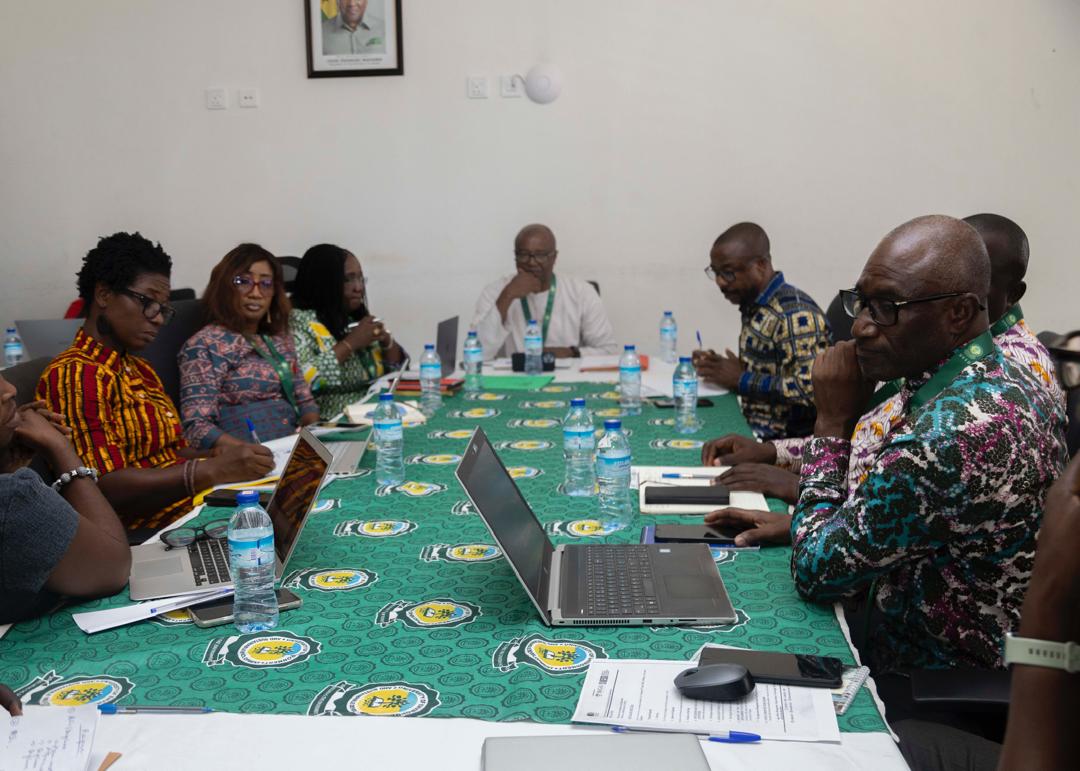
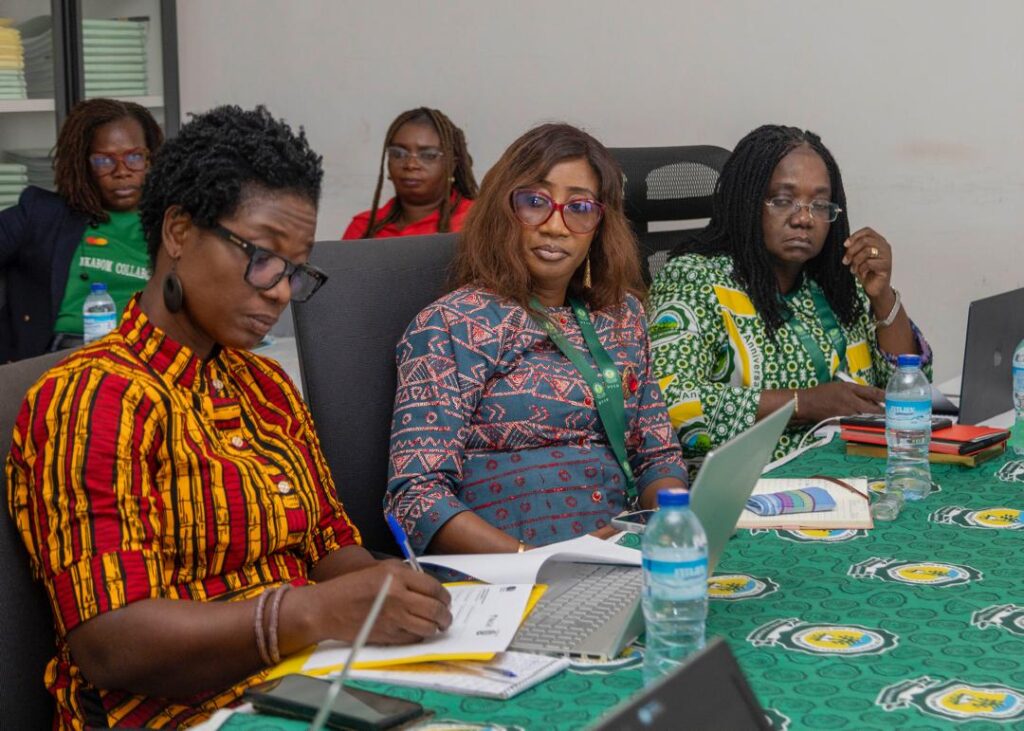
Members of the Nkabom Collaborative-UESD, Somanya, have held strategic discussions on the implementation and outlook for Year Two activities during a meeting at the University’s Council Chamber.
The meeting, chaired by the Project Investigator (PI) of the Nkabom Collaborative and Vice-Chancellor of UESD, Prof. Eric Nyarko-Sampson, brought together members of the project implementation team to review progress, address emerging challenges, and outline strategic priorities aimed at deepening the Project’s impact. Other members of the Collaborative included the Project Coordinator, Prof. Edward Wiafe Debrah, who is also Pro Vice-Chancellor, the Project Administrator, Mrs Mary Abena Agyepong, and the Registrar, and the Project leads.
As part of its Year Two agenda, UESD is intensifying stakeholder engagement, curriculum development, and capacity-building initiatives in agro-waste management and aquaculture technology. While diploma programmes under the Project have already received approval, degree programmes are awaiting final regulatory clearance.
The Project has successfully rolled out pilot training programmes, including compost production training, with plans underway to train more than 200 youth and small and medium-sized enterprises (SMEs). However, some training modules have experienced delays due to setbacks in equipment procurement.
A key highlight of the meeting was the Project’s commitment to establishing a robust mentorship and incubation framework to support women-led and youth-owned businesses. Initial steps have been taken to onboard mentors, while efforts are also being made to strengthen collaboration with industry players, including the Association of Ghana Industries (AGI).
The team further announced plans to organize a high-level policy roundtable involving government agencies, regulators, and development partners to discuss sustainable development and enterprise growth within the agro and aquaculture value chains.
In addition, an entrepreneurship showcase is being planned to provide agro-based businesses with opportunities to connect with markets, investors, and potential business partners.
UESD is also strengthening its research component through a targeted needs assessment of agro and aquaculture value chains to guide the design of specialized training programmes. The Project is further exploring opportunities to expand into additional value chains, including rice production and aquaculture systems.
Discussions at the meeting drew inspiration from lessons gained during a recent international study visit to Morocco, where participants observed the role of innovation ecosystems, digital infrastructure, and strong industry partnerships in driving sustainable development.
The Project also identified low awareness levels in some rural communities as a challenge and outlined strategies to intensify community sensitization and inclusion, particularly among underserved groups. Plans are underway to strengthen outreach through media engagement and local partnerships.
Addressing the meeting, Prof. Eric Nyarko-Sampson underscored the importance of teamwork, innovation, and accountability, describing the Nkabom Collaborative Project as a critical vehicle for sustainable development, entrepreneurship, and youth empowerment in Ghana.