The University of Environment and Sustainable Development (UESD),Somanya, Eastern Region, through its Nkabom Collaborative, has concluded the second phase of its Certificate Programme in Compost Production, aimed at deepening practical learning and strengthening collaboration among participants.
The 10-day training, held at the Somanya campus from 26 March to 16 April, was organised in partnership with the Mastercard Foundation and McGill University. The programme was structured in two phases: an initial theoretical component delivered on campus, followed by a field-based phase that emphasised group engagement. This approach enabled participants to apply knowledge collectively and develop innovative, scalable solutions in compost production.
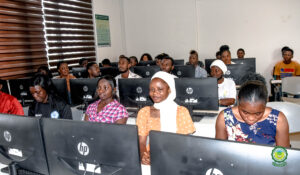
The training brought together a diverse group of stakeholders from across the agricultural value chain, including farmers, agro-processors, waste handlers, extension officers, cooperatives, and youth groups. Through a blend of classroom instruction and hands-on fieldwork, participants acquired practical skills in organic waste management, compost material selection, soil health improvement, and efficient composting techniques.
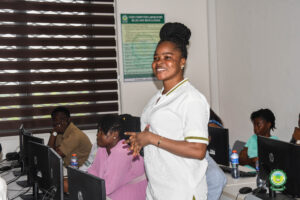
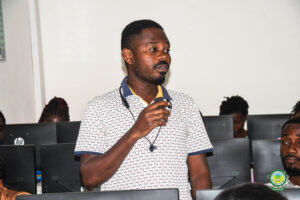
Under the second phase, participants were put into six thematic groups-Carbon, Oxygen, Circular Economy, International, Compost Plant, and Phosphorus. Each group shared experiences and insights gained throughout the training, demonstrating a strong understanding of practical composting methods, business-oriented approaches, and the importance of regulatory compliance in sustainable waste management.
Participants also presented innovative ideas inspired by the training, including community-based composting initiatives and cooperative business models designed to scale sustainable practices and promote environmental stewardship.
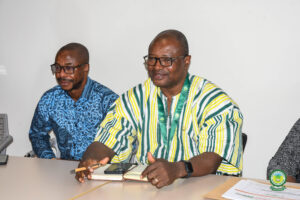
Addressing participants at the closing ceremony, the Vice-Chancellor and Project Investigator (PI) of the Nkabom Collaborative-UESD, Professor Eric Nyarko- Sampson, urged trainees to harness collaboration and innovation in transforming organic waste into sustainable wealth. He emphasised the importance of teamwork, encouraging participants to form cooperatives or associations to improve access to resources and funding.
Professor Nyarko-Sampson highlighted the inclusive vision of the Nkabom initiative, which targets young people, particularly those aged 18 to 35 as well as vulnerable groups such as women and internally displaced persons. He explained that the initiative is not funded by the Government of Ghana but is a collaborative effort among academic institutions and industry partners, reflecting the essence of “Nkabom” as unity.
He also acknowledged the commitment of participants who travelled from Regions such as Ho, Oti, and Kumasi, and assured them of the University’s continued efforts to improve welfare arrangements in future programmes.

In his remarks, the Project Coordinator of the Nkabom Initiative-UESD and Pro-Vice-Chancellor, Professor Edward Wiafe Debrah, encouraged participants to move beyond theory and build strong professional networks. He expressed confidence that the knowledge and skills acquired during the training would empower them to become successful compost production managers and entrepreneurs, contributing meaningfully to sustainable agriculture and environmental management in Ghana.
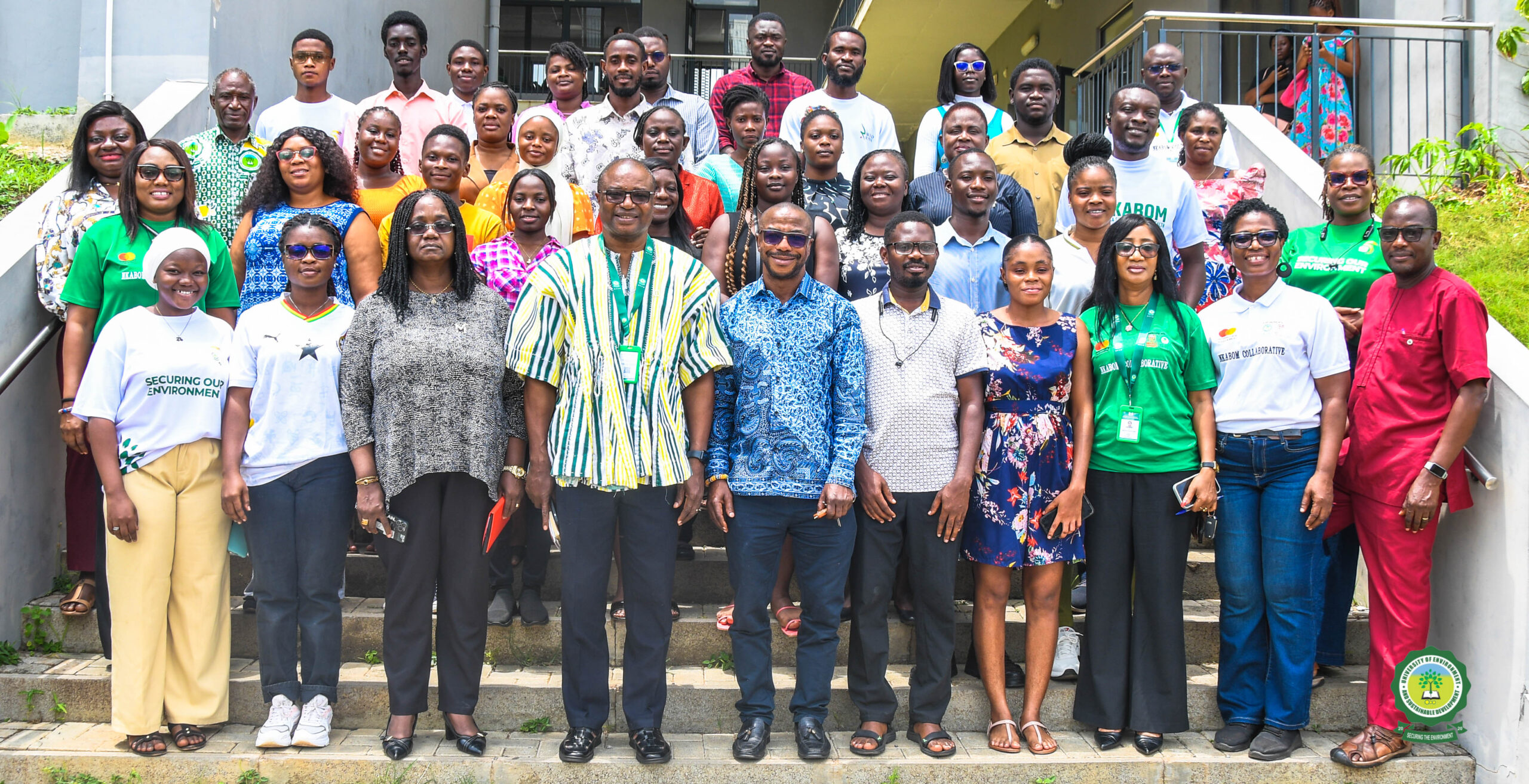
Present at the closing ceremony were members of the Nkabom Collaborative-UESD, including the Project Administrator, who is also the Registrar of UESD, Mrs Mary Abena Agyepong, as well as trainers and resource persons for the programme.
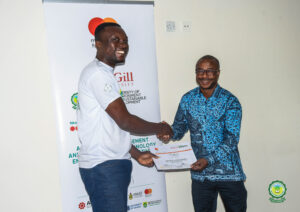
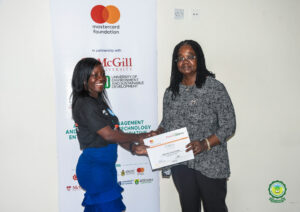
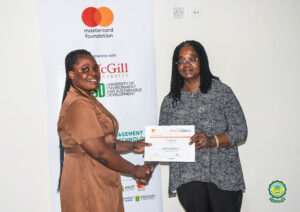
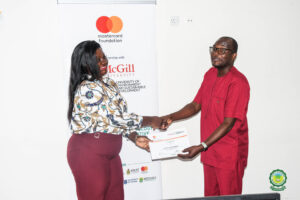
Certificates were presented to participants at the close of the programme.