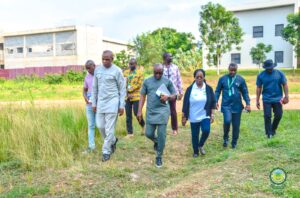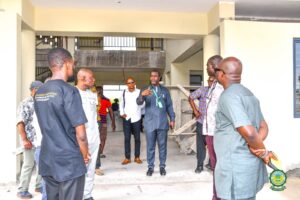
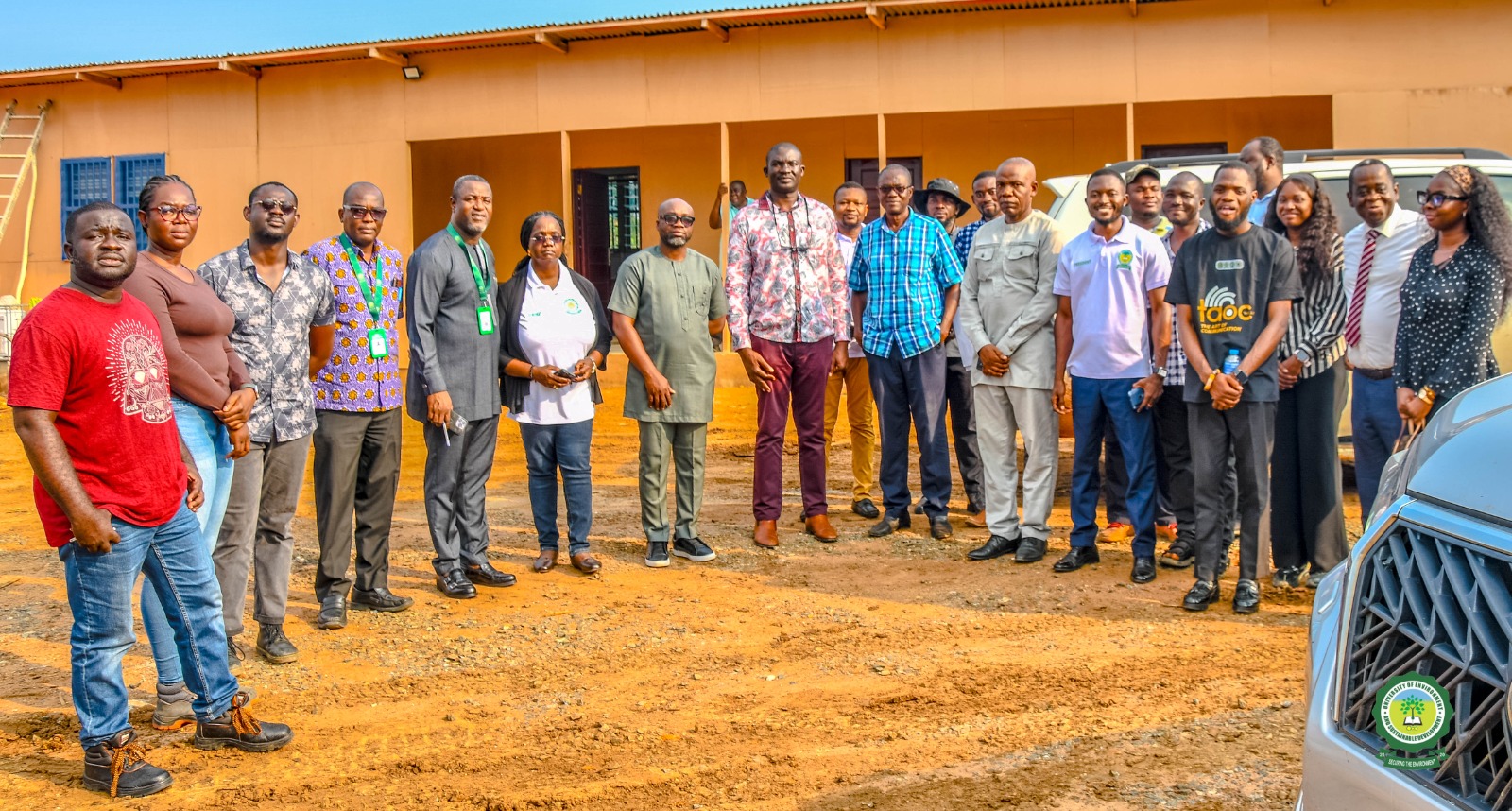
A five-member monitoring team from the Secretariat of the Ghana Education Trust Fund (GETFund), Accra, has visited the University of Environment and Sustainable Development (UESD), Somanaya, to assess the progress and current status of infrastructure projects sponsored by the Fund.
The visit formed part of a nationwide monitoring exercise by GETFund to selected public tertiary institutions to obtain first-hand information on the implementation of GETFund-sponsored projects and the challenges affecting their timely completion. The delegation, led by a Member of the GETFund Board of Trustees, Mr. Daniel Botchway, was received by members of the University’s Management in the Council Chamber, where the team held discussions with key officials before proceeding to inspect projects on campus.
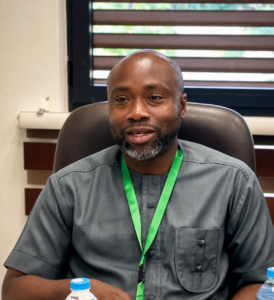
Explaining the rationale for the exercise, Mr. Botchway said, the monitoring visits were intended to give members of the GETFund Board direct insight into the actual status of projects being financed by the Fund. He observed that project reports often present completion percentages and financial figures, but such information may not always provide a complete picture of what is happening on the ground. “The field visit allows us to physically see the projects, assess their progress and understand the challenges directly,” he explained.
He said, the exercise is being undertaken to enable the Board to develop a broader understanding of the implementation challenges associated with GETFund-sponsored infrastructure projects. Mr. Botchway also clarified the role of GETFund in the implementation of infrastructure projects, explaining that the expression “GETFund projects” technically refers to projects sponsored or financed by the Fund.
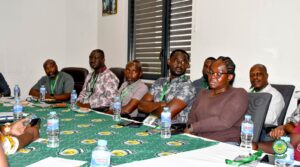
He noted that GETFund does not directly award construction contracts. Rather, beneficiary institutions go through the appropriate processes and agencies responsible for contract awards, while GETFund provides the financing. He identified the financial capacity of contractors as one of the major factors contributing to delays in the completion of infrastructure projects.
Mr. Botchway explained that contractors may commence construction and complete portions of a project before encountering financial difficulties, particularly when payments on submitted certificates are delayed.
He further noted that GETFund’s resources are derived from tax revenue transfers and are not necessarily available as a single lump sum at the beginning of a project. Consequently, delays in payment can place additional financial pressure on contractors, especially those with limited capacity to pre-finance construction activities.
Prolonged delays can also lead to significant increases in construction costs, requiring projects to be reviewed and additional funding to be considered. Such situations, he noted, place further pressure on GETFund’s resources and may affect the Fund’s ability to initiate other projects.
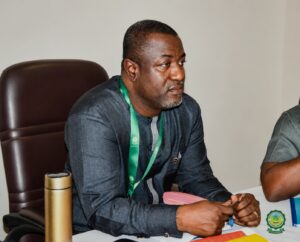
The Dean of the School of Sustainable Development (SSD), Prof. Anthony Amoah, expressed appreciation to GETFund for its continued support towards the development of the University and for efforts to reactivate projects that have experienced prolonged delays. He said, the monitoring exercise is important because it provides an opportunity for both UESD and GETFund to develop a shared understanding of the status of the University’s infrastructure projects and the challenges affecting their completion.
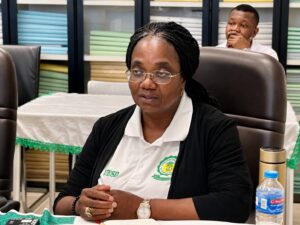
The Registrar, Mrs. Mary Abena Agyapong, highlighted the increasing pressure that delayed infrastructure projects are placing on the University as student numbers continue to grow. She noted that some of the projects inspected by the monitoring team had been awarded as far back as 2016 but remained incomplete. Mrs. Agyapong therefore called attention to projects whose costs have increased substantially as a result of prolonged delays. She expressed the hope that the monitoring exercise would enable GETFund to identify the challenges affecting the projects and take appropriate measures to facilitate their completion.
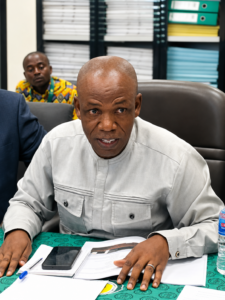
The Director of Physical Development and Estate Management, Surv. Isaac Abbam, called for greater involvement of beneficiary institutions in the conceptualisation, design and planning of government-funded infrastructure projects. Early engagement with beneficiary institutions would ensure that facilities are designed to respond to the specific operational, technical and future needs of the institutions that would ultimately use them.
The Director of Finance, Mr. Baffour Awuah Kwabi, expressed appreciation to GETFund for its contribution to the University’s infrastructure development. He emphasised the importance of ensuring that the University receives copies of project certificates and other relevant documentation to enable the Finance Directorate to maintain accurate financial records and prepare appropriate financial statements and periodic reports for Management and Council.
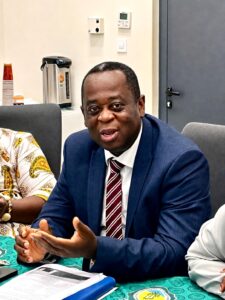
Mr. Kwabi also drew attention to the financial implications of prolonged project delays. He noted that projects that remain unfinished for years can lead to substantial increases in construction costs, placing additional pressure on national resources and the finances of GETFund. He therefore appealed for closer monitoring of contractor performance and the consideration of appropriate measures where contractors consistently fail to deliver within agreed timelines, and called for relevant legal and contractual provisions to be applied where necessary to address persistent non-performance.
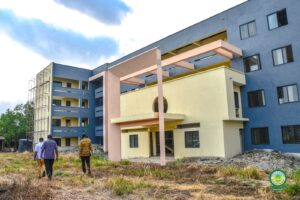
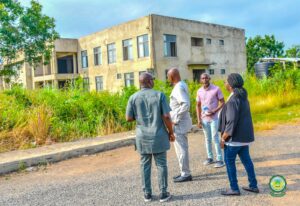
The team visited the University’s key infrastructure projects, including the Administration Building, the Library and Computer Laboratory. They also inspected two major student accommodation projects being developed on campus: an 800-bed-capacity hostel currently under construction and a 450-bed hostel facility nearing completion.