
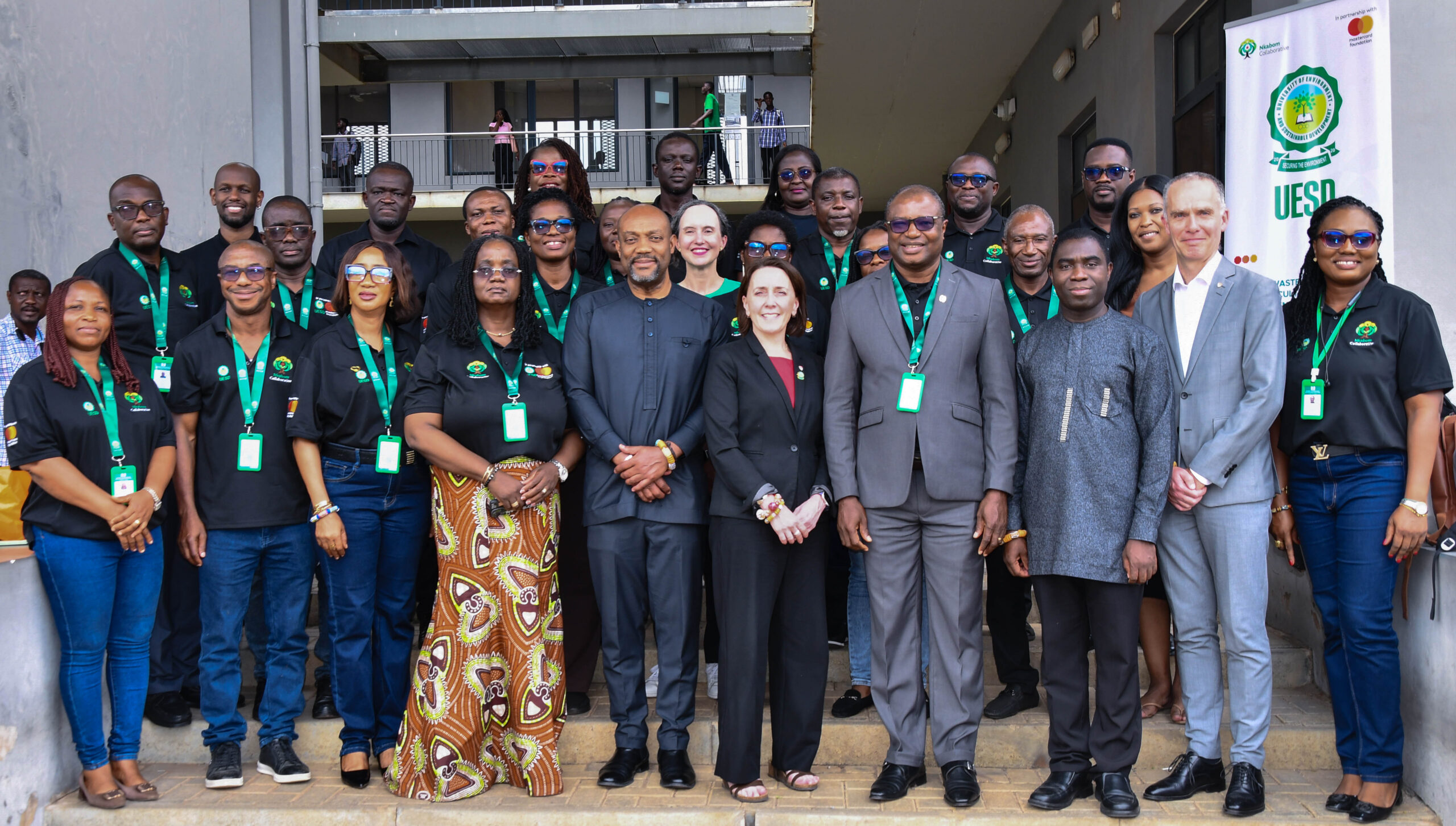
The Nkabom Collaborative-UESD has hosted a seven-member delegation from the Nkabom Collaborative Secretariat at McGill University, Canada, for strategic discussions on deepening the partnership in applied research, academic exchanges, enterprise incubation, mentorship, and youth employment opportunities.
The delegation, led by the Provost and Executive Vice-President (Academic) of McGill University, Prof. Angela Campbell, included the Director of the Nkabom Secretariat, Mr Pierre Brunache Jr., and other members of the Secretariat. The visit formed part of the Secretariat’s annual engagements with partner institutions in Ghana and was held at the University’s Computer Laboratory.
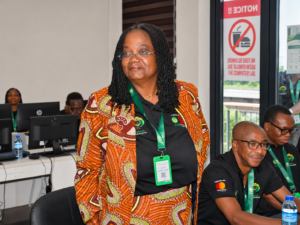
Welcoming the delegation, the Registrar of UESD and Project Administrator, Mrs Mary Abena Agyepong, highlighted Somanya’s agrarian and peri-urban character, as well as its significant youth population, noting that the University’s presence offered an important opportunity to drive development in the area.
She acknowledged the longstanding relationship between McGill, a university with more than 200 years of history, and UESD, in its sixth year, and expressed confidence that McGill’s institutional experience could be a valuable guide for UESD’s growth. She called for stronger communication, mutual trust, knowledge exchange, and shared responsibility to deepen the partnership. She described UESD as the University of the Future, which focuses on critical development concerns, including water, clean air, and food security.
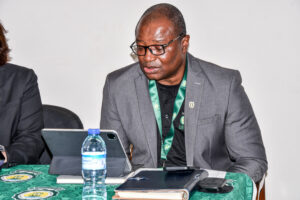
Presenting UESD’s strategic priorities and contribution to the Nkabom Collaborative, the Vice-Chancellor and Principal Investigator, Prof. Eric Nyarko-Sampson, said Year Two marked an important phase in programme design and delivery under the University’s Agro-Waste Management and Aquaculture Development Entrepreneurship Initiative.
He reported that the Academic Board approved 15 competency-based short certificate courses in aquaculture, agro-waste management, entrepreneurship and digital marketing, while four (4)academic programmes in Aquaculture Technology and Agro-Waste Technology have been submitted to the regulatory body for accreditation.
The PI also highlighted practical training in compost production and fish processing, as well as the Agri-Food Systems Business Fair, which showcased 11 youth-led businesses, seven of them female-led. He cited Eastside Sankofa Industries Ghana’s success in winning the 2026 Made in Carbon Africa Case Competition with its innovation in mango post-harvest waste management as evidence of the entrepreneurial potential emerging from the initiative.
Outlining priorities for Year Three, Prof. Nyarko-Sampson identified the delivery of 10 short courses for 500 participants, the establishment of on-campus aquaculture and agro-waste demonstration facilities, 100 internship and apprenticeship placements, and efforts to connect 200 beneficiaries to employment and enterprise opportunities. The University also plans to incubate 20 youth- and women-led businesses, mentor 50 enterprises and support the creation of 150 jobs.
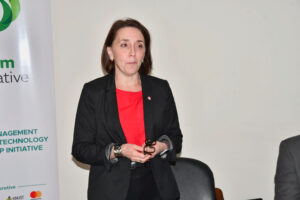
Prof. Campbell commended UESD for its energy and enthusiasm, describing it as a young institution with considerable potential. She said McGill was working towards a more coordinated institutional approach to the Nkabom Collaborative, involving academic and administrative representatives.
She stressed that McGill regards itself as a full and respectful partner in the collaboration and recognised the expertise, research capacity and knowledge already available within Ghanaian institutions. She identified stronger University-industry alignment, deeper collaboration among partner institutions, business readiness and support for young enterprises to scale beyond incubation as key areas requiring attention.
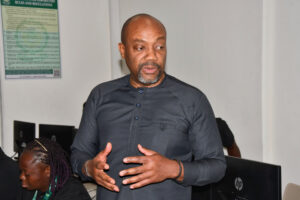
Discussions also focused on practical ways to improve access to financing and markets for youth-led businesses. The Director of the Nkabom Secretariat, Mr. Brunache Jr., highlighted the need to connect emerging enterprises to funding opportunities. UESD should compile a list of businesses requiring financial support to facilitate connections with the Association of Ghana Industries and relevant financial institutions.
Participants also encouraged the University to adopt a market-driven approach to aquaculture and agro-waste enterprises by identifying potential buyers and securing off-taker arrangements before production. This, they noted, would enable entrepreneurs to understand market requirements, production standards and consumer expectations.
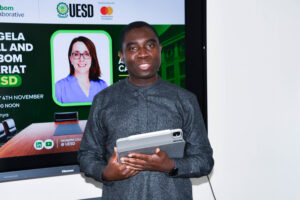
On research collaboration, the Academic Lead of McGill’s Sustainability and Risk Unit, Prof. Ebenezer Miesah Kwuofie, highlighted opportunities in rice waste processing, agro-waste characterisation and the adaptation of the Circular Bioeconomy Accounting Platform (CBIT) to Ghanaian conditions. The platform could help identify viable ways of converting agricultural waste into food, animal feed, biochemicals and other useful products.
Other proposed areas of collaboration included graduate research placements at McGill, with UESD students expected to undertake practical training of up to 120 days; joint research with commercialisation potential; peer-to-peer mentorship involving students from McGill and partner institutions; and joint supervision of postgraduate research, particularly at the doctoral level.
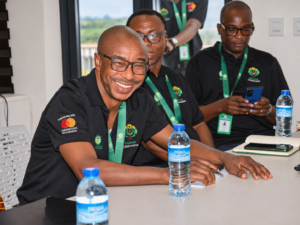
Prof. Edward Wiafe Debrah, UESD Pro-Vice-Chancellor and Project Coordinator, recalled a visit to Montreal; he cited an example of a farmer who used wood waste as a growing medium for plants, with encouraging results compared with conventional soil cultivation. He said the experience demonstrates the potential of research and innovation to transform waste materials into valuable resources. He called for stronger collaboration with McGill’s Department of Bioresource Engineering, particularly in agro-waste management, aquaculture, and to identify and utilise underexploited biological resources.
The discussions also explored collaboration among McGill, UESD and Ashesi University on the application of artificial intelligence in aquaculture, shared access to specialised research equipment and the development of locally fabricated agricultural machinery through a collaborative mechanisation team.