
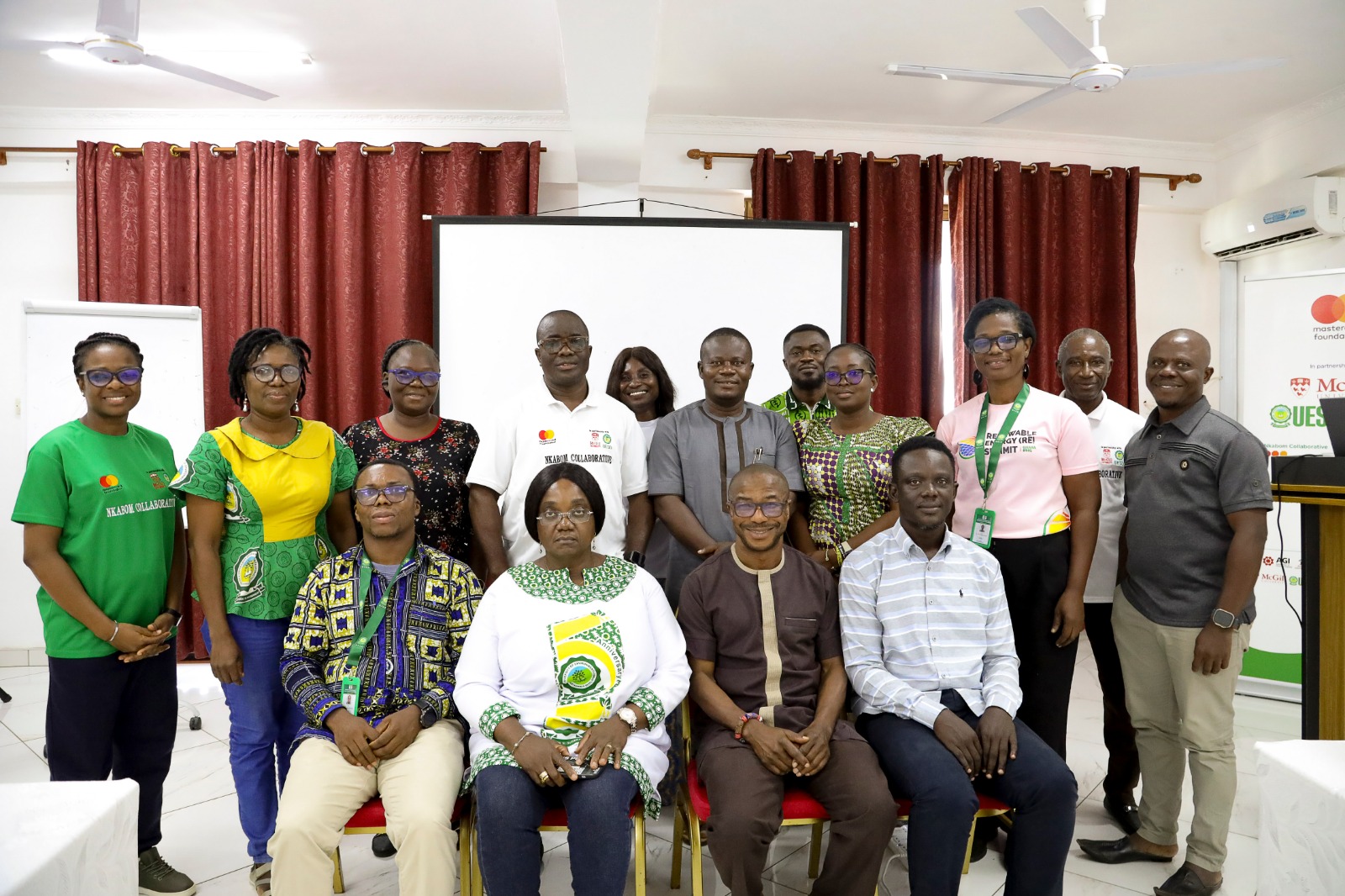
Members of the Nkabom Collaborative-UESD, in partnership with the Mastercard Foundation and McGill University, have developed two cutting-edge postgraduate programmes designed to address emerging national and global development challenges. These are: MSc/MPhil/PhD in Agrifood Systems and Bioresources and MSc/MPhil/PhD in Aquatic Biosciences and Blue Economy.
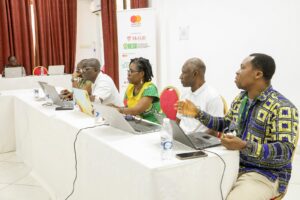
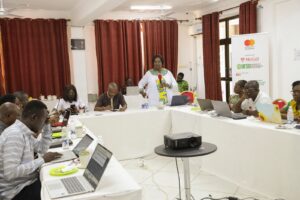
This was at a three-day workshop in Ho, the Volta Regional capital, which brought together project leads and subject experts to develop and refine postgraduate curricula that respond to emerging national and global development priorities. The initiative forms part of the broader Nkabom Collaborative Project, which seeks to transform higher education through innovation, entrepreneurship, employability, and sustainable development.
Participants included the Agro-Waste Management Lead, Prof. Richard Amfo-Out; Aquaculture Technology Lead, Dr. Christian Ayisi Larbi; Entrepreneurship Lead, Dr. Eunice Stella Nyarko; Agro-Waste Management Expert, Dr. Joe Acquah; Aquaculture Expert, Dr. Grace Boamah; Monitoring and Evaluation Officer, Dr. Andrews K. Taayeli.
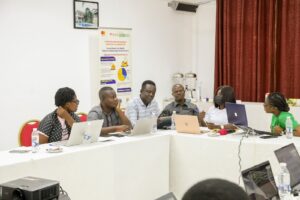
Also present at the workshop were the Principal Investigator of the Nkabom Collaborative Project, Prof. Eric Nyarko-Sampson, Vice-Chancellor of UESD; the Project Coordinator, Prof. Edward Wiafe Debrah, Pro Vice-Chancellor of UESD; and the Project Administrator, Mrs Mary Abena Agyepong, Registrar of UESD.
The newly developed curricula place a strong emphasis on enhancing graduate employability through practical, industry-oriented learning approaches. Key features of the programmes include experiential learning opportunities, industry placements and internships, teaching assistantships, applied research and innovation projects, as well as stakeholder engagement and value-chain development activities.
These components are designed to equip students with the knowledge, skills, and hands-on experience required to address contemporary challenges in their respective fields. Upon completion, graduates will be well-positioned to pursue diverse career pathways in academia, industry, government institutions, consultancy, development organisations, and entrepreneurship, enabling them to contribute meaningfully to national development and sustainable economic growth.
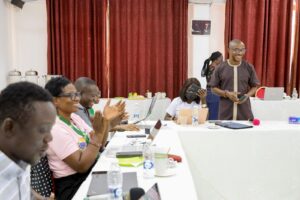
One of the highlights of the workshop was the integration of entrepreneurship and business development into the curricula. Participants agreed that postgraduate education should equip students not only with academic knowledge but also with the skills needed to create businesses, develop innovative solutions, and generate employment opportunities.
The workshop also approved the Aquatic Biosciences and Blue Economy programme, positioning UESD among the few Universities in Ghana developing postgraduate education in the rapidly growing blue economy sector. In addition, the curricula incorporate emerging technologies such as Geographic Information Systems (GIS), remote sensing, data analytics, biotechnology applications, climate-smart agriculture, and circular bioeconomy approaches to prepare students for the future world of work.
Participants further strengthened doctoral programme structures, explored flexible learning approaches for working professionals, and discussed plans to establish a School of Graduate Studies to support UESD’s expanding postgraduate portfolio