
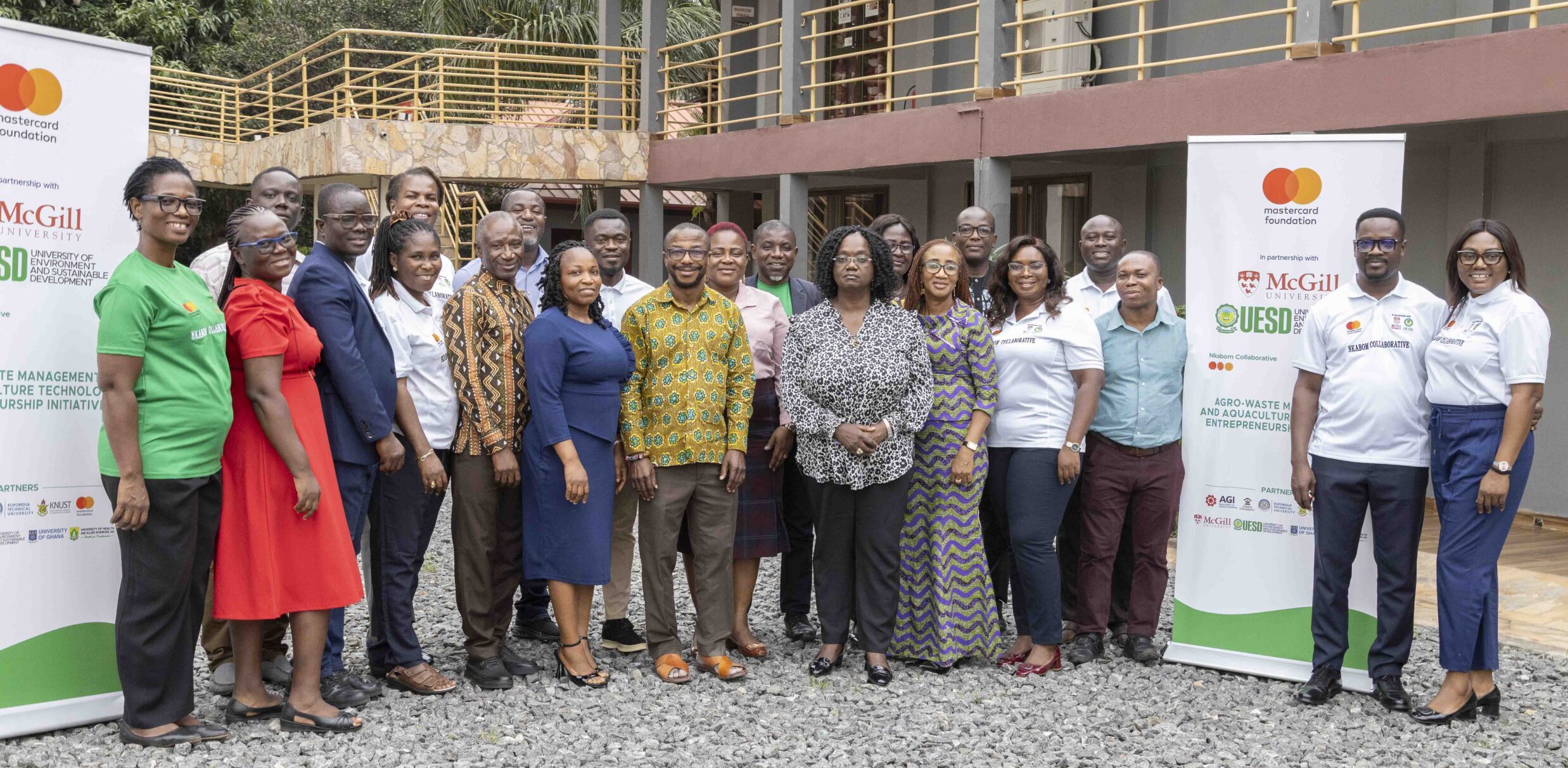
A three-day retreat for members of the UESD Nkabom Collaborative has taken place in Ho, the Volta Regional capital. The programme, from 3rd to 6th February served as a strategic platform for validating its Quarterly Operational Plan, strengthening its Monitoring, Evaluation and Learning (MEL) framework, and finalising key guiding documents, including the Standard Operating Procedures (SOPs), Policy Engagement Roadmap, Communications Strategy, and Sustainability Framework.
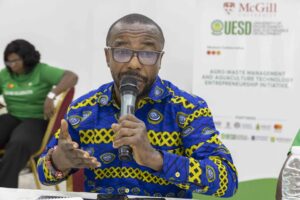
In his opening address, the Principal Investigator and Vice-Chancellor of UESD, Prof. Eric Nyarko-Sampson, whose speech was delivered by the Project Coordinator and Pro Vice-Chancellor, Prof. Edward Wiafe Debrah, said the retreat reaffirms the Collaborative’s role as a convening platform for partnerships. He noted that the initiative continues to work alongside national agencies, district assemblies, private sector partners and international Universities to co-create solutions and inform policy. Through evidence-based policy briefs, stakeholder dialogues and shared learning across the Collaborative, he said, the project is strengthening Ghana’s capacity to lead in sustainable agri-food systems and circular economy development.
He reminded members that the planning session was not merely a review of activities, but a design space for the future. He urged participants to align their workplans, sharpen their deliverables and commit to outcomes that are measurable, inclusive and transformative.
The Project Coordinator, Prof. Wiafe Debrah, moderated the three-day event.
The retreat commenced with a presentation by the Monitoring and Evaluation Lead, Dr. Andrews Kofi Taayeli, who reviewed Year One activities, lessons learned, progress made, risks and successes. He reported strong early performance in academic and non-academic programme development, baseline assessments, the kick-starting of entrepreneurship training programmes, and notable progress in awareness and communication activities, as well as in frameworks and data tools. He indicated that the major challenge remains the delay in accreditation of programmes.

This was followed by presentations from the various Year Two leads, including pillar leads in Agro-Waste Processing, Aquaculture and Entrepreneurship. Their submissions focused on curriculum development, training, incubation and policy dialogue. They also addressed Agro-Waste Valorisation and Circular Bioeconomy, research and teaching methodologies, entrepreneurship and incubation models, information and reporting strategies, aquaculture technology systems, and gender, disability and youth inclusion strategies. Additional team presentations were made on Communications and Visibility, Finance, and Research.
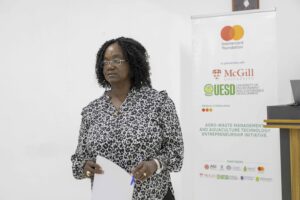
The Project Administrator, Mrs. Mary Abena Agyepong, who is also the Registrar of UESD, led participants through a team-building and reflection session. She stressed that team building is about building trust, learning together and making meaningful impact. One of the most powerful outcomes of effective team building is the development of a team charter, a living document that captures a team’s shared goals, roles, norms and accountability mechanisms. She expressed the hope that once developed for the UESD Nkabom Collaborative, the charter would significantly enhance effective collaboration. Mrs. Agyepong urged participants not to treat the Nkabom project as “business as usual,” stressing that the Collaborative’s strongest point is partnership. “Let us leverage on it and do things that will be in the interest of the Collaborative,” she advised.
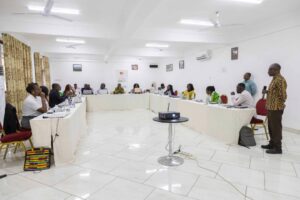
In his closing reflections, the Project Coordinator, Prof. Wiafe Debrah, commended members for their active participation and candid contributions throughout the retreat. He noted that the quality of discussions and the clarity of commitments demonstrated the maturity and shared sense of purpose within the Collaborative. He encouraged members to translate the plans and frameworks agreed upon into concrete actions that will deliver measurable impact at the community and national levels.
Prof. Wiafe Debrah further stressed that the success of the Nkabom Collaborative will depend on sustained communication, accountability and collective ownership. He urged all pillar leads and team members to remain focused on timelines, strengthen cross-pillar collaboration, and continuously document lessons learned to inform policy and practice. He expressed confidence that with renewed commitment and coordination, the Collaborative will achieve its strategic objectives and contribute meaningfully to Ghana’s sustainable development agenda.