
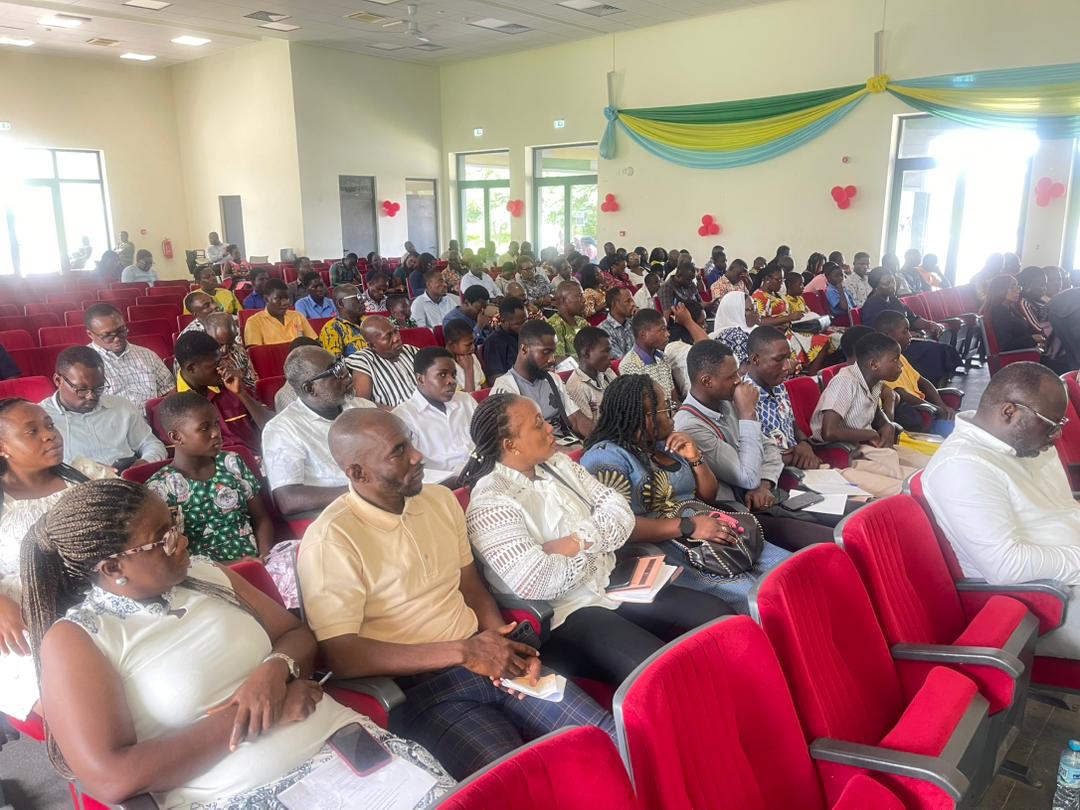
Thirty (30) Basic Schools in the Eastern Region are participating in the 2026 Community Development Challenge (CDC) Awards of the University of Environment and Sustainable Development (UESD), coordinated by the Community Engagements and Project Innovations Unit (CEPIU) under the Office of the Vice-Chancellor
The CDC is an annual flagship initiative that provides a platform for schools within the University’s catchment area to compete for awards after completing selected tasks under the University’s Community Engagement Programme. The initiative seeks to empower young learners with practical knowledge and skills in sustainable agriculture, while contributing to food security and environmental stewardship.
This year’s focus is on “Promoting Food Security and Climate-Smart Agriculture through Sustainable School-Based Organic Gardening in Ghana,” aimed at enhancing food security, environmental awareness, and climate-smart farming practices. Each school will be provided with selected crops to cultivate and maintain over a period of three to six months. At the end of the cultivation period, a team of experts will assess the projects to determine the winning school.
Participating schools include Koforidua Presby Basic School, Old Mangoase Presby Basic School, Aburi-Amanfo D/A School, Okwenya M/A School, Akuapem South Cord School, Nyarede-Agavenya R/C Basic School, Nuaso St. Clement R/C JHS, Abonsen Presby Basic School, Aseseeso Presby JHS, and Adjikpo M/A Basic School. A Lecturer at the Department of Environment and Public Health, Dr. Lloyd Larbi, outlined the criteria for participation in the challenge.
At a ceremony held at the Auditorium of the Multipurpose Building to launch the event, the Pro-Vice-Chancellor, Prof. Edward Wiafe Debrah, expressed delight that school children would be actively engaged in the drive to attain zero hunger, emphasising that they represent the future of food security.
He noted that the CDC aligns with the Nkabom Project currently being undertaken by the University. He expressed excitement about the diverse range of schools participating and advised representatives to be intentional about pest management throughout the challenge. Prof. Wiafe Debrah advocated integrated pest management practices to ensure sustainability, cautioning against attempts to completely eliminate pests, which he noted could be harmful to the ecosystem.
The Registrar, Mrs. Mary Abena Agyepong, described the CDC as an integral part of the University’s community engagement initiatives. She emphasised that championing the zero-hunger agenda requires the active involvement of young people, as they are the ones who will shape the future.
Mrs. Agyepong highlighted that the 2026 CDC promises to be exciting and impactful, with a focus on inter-school organic vegetable production aimed at advancing the zero-hunger goal. She stressed that the initiative is not merely a gardening competition but a practical and innovative model for promoting climate-smart agriculture. She further encouraged the pupils to remember UESD as the University that nurtured and empowered them to become change agents in the zero-hunger agenda, especially when the time comes for them to choose a tertiary institution in Ghana.
The Guest Speaker, Dr. Frank Kwekucher Ackah, a Senior Lecturer at the Department of Crop Science at the University of Cape Coast, who spoke on the theme, described the initiative as more than a competition. He characterised it as a transformative movement that connects education, agriculture, sustainability, and community resilience in practical ways.
He highlighted the urgent challenges of food insecurity, climate change, rising food prices, and environmental degradation, stressing the need to equip young learners with both academic knowledge and hands-on skills. He underscored the importance of school-based organic gardening as a powerful educational tool, noting that school gardens serve as science laboratories, nutrition classrooms, climate education centres, and leadership training grounds. Through such initiatives, pupils gain practical experience in composting, biodiversity, water conservation, and other climate-smart agricultural techniques.
Dr. Ackah further noted that the initiative extends beyond schools to families and communities by encouraging backyard gardening, improving nutrition, reducing dependency, and strengthening local food systems. He commended UESD for championing the project and demonstrating how academic institutions can drive meaningful community impact. He called on schools, teachers, pupils, and stakeholders to actively support and scale the initiative nationwide, encouraging pupils to cultivate responsibility, discipline, teamwork, and innovation through the project.
There were goodwill messages from the Eastern Regional Directorate of Agriculture and the Ghana Education Service. In their remarks, they challenged schools to transform organic waste into compost for agricultural use, highlighting it as a practical step toward promoting sustainable agriculture and environmental stewardship.