
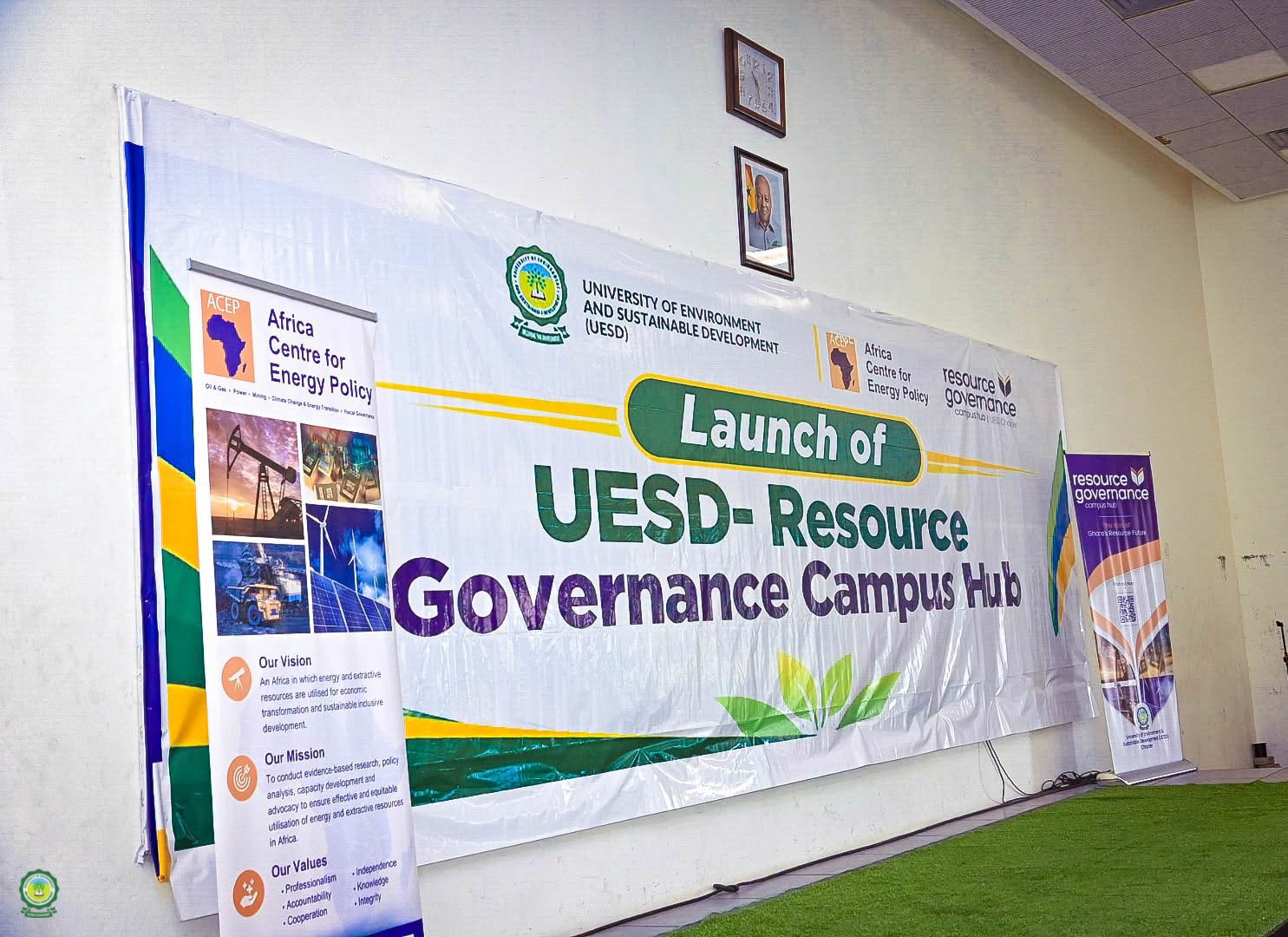
The University of Environment and Sustainable Development (UESD) Resource Governance Campus Hub (RGCH) has been launched. The launch took place at a ceremony held at the University’s Auditorium, Multipurpose Building, attended by members of the University community and representatives of the Africa Centre for Energy Policy (ACEP).
The RGCH is a student-led initiative by the ACEP that empowers tertiary students to advocate sustainable governance of Ghana’s energy sector and natural resources. It also provides students with opportunities for training, research, advocacy, leadership development and engagement with professionals and policymakers. UESD becomes the fourth public University in Ghana to establish the Hub, joining UENR, KNUST and UCC.
In an address, the Vice-Chancellor, Prof. Eric Nyarko-Sampson, emphasised the importance of collaboration, accountability, transparency and responsible resource management in promoting sustainable development. He highlighted the need for effective planning and prudent utilisation of resources, stressing that individuals and institutions must be accountable for their actions and responsibilities.
Prof. Nyarko-Sampson encouraged students and other stakeholders to utilise the Resource Governance Campus Hub as a platform for learning, research, professional development and knowledge-sharing. He urged them to embrace active participation, collaboration and professionalism, expressing optimism that the Hub would strengthen the University’s contribution to responsible national development.
Launch and Address
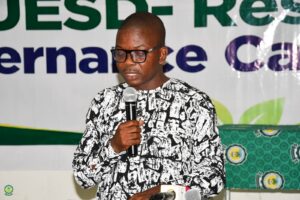
Launching the Hub, ACEP’s Policy Lead for Petroleum and Conventional Energy, Mr. Kodzo Yaotse, challenged students to champion transparency, scrutinise public expenditure and demand accountability from public officials.
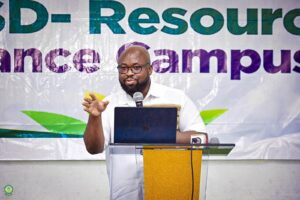
In his keynote presentation on “Strengthening Accountability in Resource Governance through Active Citizenship,” Mr. Yaotse highlighted the importance of Ghana’s natural resource wealth, particularly petroleum and gold, as key sources of revenue for national development. However, he cautioned that these resources are finite and their revenues volatile, making prudent management, transparency and accountability essential for sustainable development. According to him, Ghana earned approximately US$11.98 billion from petroleum revenues between 2011 and 2025, while gold exports generated US$20.2 billion in 2025, underscoring the economic significance of the extractive sector.
Mr. Yaotse examined resource governance challenges, drawing lessons from Nigeria, Angola and Ghana. He cited cases involving former Nigerian Petroleum Minister Diezani Alison-Madueke, Angola’s Isabel dos Santos and the controversial Ghana Revenue Authority SML contracts to illustrate the consequences of weak accountability and inadequate oversight. He also discussed the Petroleum Revenue Management Act, 2011 (Act 815), particularly the Annual Budget Funding Amount (ABFA), and the 2025 amendment (Act 1138), which allocates the entire ABFA to infrastructure development under the government’s Big Push programme. He urged participants to critically assess the implications of the policy and the need for effective monitoring of public expenditure.
He highlighted the roles of the Public Interest and Accountability Committee (PIAC), the Right to Information Act, the Auditor-General, the Office of the Special Prosecutor, Parliament and the Extractive Industries Transparency Initiative (EITI); he challenged students and young people to demand transparency, scrutinise public expenditure and hold public officials accountable. He encouraged them to actively engage in resource governance processes to ensure that Ghana’s natural resource wealth translates into meaningful and sustainable development for all citizens.
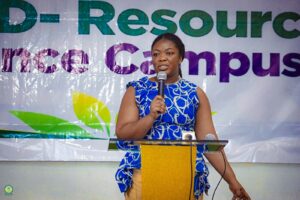
Commenting, a Policy Analyst at ACEP, Ms. Rosemond Sefa, also highlighted Ghana’s and Africa’s abundant natural resources, questioning why these have not translated into improved living conditions for citizens. She was confident that the Hub would promote knowledge-sharing and critical engagement while equipping students to contribute meaningfully to addressing resource governance challenges.
Signing of MoU, Unveiling of Patron and Foundation Executives
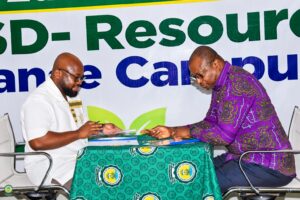
The highlight of the event was the signing of a Memorandum of Understanding (MoU) between UESD and ACEP to strengthen collaboration in resource governance, research, advocacy, and capacity development. It was signed by Vice-Chancellor Prof. Eric Nyarko-Sampson for UESD, and Mr. Kodzo Yaotse on behalf of ACEP.
The ceremony also featured the unveiling of the Hub’s Patron and Foundation Executives. Dr. Emmanuel Angmor, Head of the Department of Applied Economics, was unveiled as the Patron, alongside the Foundation Executives: Richard Ntebi Dawuni (President), Stephen Teye Mauhi (Coordinator), Romeo Paa Kwasi Abban (Research Lead), Theresah Konadu Abrokwah (Communication Officer) and Isaac Kakra Baidoo (Events Lead).
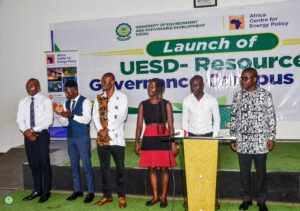
In his address, Dr. Angmor emphasised that natural resource wealth must translate into improved livelihoods rather than inequality and environmental degradation. He called for transparency, accountability, equitable benefit-sharing, gender inclusion and sustainable resource management, and pledged his support for the Hub’s success.
Others present at the event included the Registrar, Mrs. Mary Abena Agyepong; Dean of the School of Sustainable Development (SSD), Prof. Anthony Amoah; Dean of Students’ Affairs, Prof. Mrs. Daniella D. Sedegah; Chairman of the Graduate Programmes Management Committee, Prof. Nii Moi Pappoe; Deputy Registrar, Dr. Hammond Oppong Kwarteng; faculty, staff and students.