
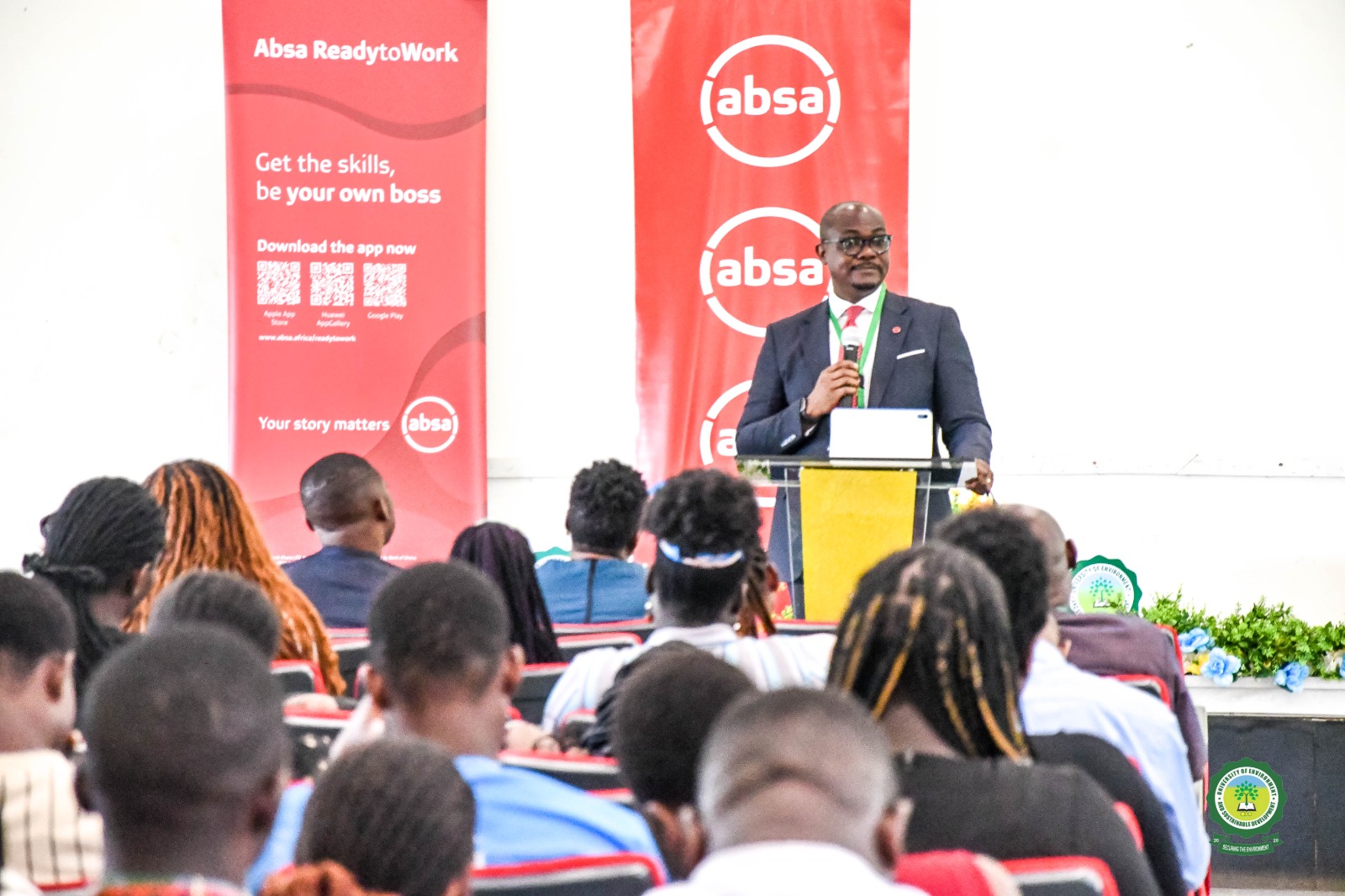
Students of the University of Environment and Sustainable Development (UESD), Somanya, Eastern Region, have been challenged to view their University degrees not as the end of their educational journey but as a launching pad for lifelong growth, leadership, and meaningful impact.
The call was made by Chief Risk Officer at ABSA Bank, Ghana, Mr. Kofi Agyarko-Kwarteng, when he delivered a lecture on the theme, “Beyond the Degree: Preparing for a Lifetime of Growth and Impact,” at the University’s Leadership Inspiration and Mentorship Series (LIMS). The programme, held at the Auditorium, Multipurpose Building, was organised by the Office of the Dean of Student Affairs to inspire students to prepare for life beyond graduation.
Mr. Agyarko-Kwarteng said, the rapidly changing global landscape demands much more than academic qualifications. He explained that while a University degree remains valuable, it is no longer sufficient on its own to guarantee success. He noted that advances in artificial intelligence, climate change, technological innovations, and evolving labour markets are transforming industries and creating new demands on graduates. According to him, although a certificate may secure a job interview, it is one’s mindset, character, adaptability, discipline, competence, and ability to solve problems that ultimately determine long-term success.
He urged students to cultivate the habit of lifelong learning, stressing that graduation should mark the beginning, not the end, of education. “The most successful people are those who remain students throughout their lives,” he said, encouraging students to continuously invest in acquiring new knowledge and skills, strengthen their communication abilities, embrace technology, manage financial resources wisely, and learn how to “learn, unlearn, and relearn.”
Mr. Agyarko-Kwarteng further emphasised that character is more important than competence, noting that integrity remains one of the most valuable assets any individual can possess. Quoting renowned investor Warren Buffett, he said employers can train technical skills but cannot teach integrity.
He advised students to become trustworthy individuals who honour their commitments, do the right thing even when no one is watching, and consistently uphold ethical values in both their personal and professional lives.
Speaking on failure, the resource person encouraged students not to fear setbacks, describing failure as an essential part of growth and success. He explained that every successful person has experienced disappointment or rejection at some point, adding that resilience and the willingness to learn from mistakes distinguish successful people from others.

On leadership, he explained that leadership is not defined by titles or positions but by influence. He urged students to begin with self-leadership by cultivating discipline, positive values, and strong personal principles before aspiring to lead others. He further encouraged students to build purposeful relationships rather than merely expanding their networks. According to him, genuine friendships, mentorship, and mutual respect often open doors that qualifications alone cannot.
He advised students to seek mentors, support one another, and nurture relationships built on trust and shared values, noting that today’s classmates could become tomorrow’s business partners, policymakers, researchers, or national leaders.
“You are part of a generation that must help build a more sustainable future,” he said. “The decisions your generation makes will shape the future of Ghana, Africa, and the world.”
He therefore encouraged the students to become innovators developing sustainable solutions, entrepreneurs creating businesses that generate economic value while protecting the environment, policymakers driving meaningful change, and leaders demonstrating that development and sustainability can go hand in hand.
The lecture concluded with an engaging interactive session during which students asked questions, shared their perspectives, and sought practical advice on career development, leadership, entrepreneurship, financial management, and navigating the rapidly evolving world of work. Mr. Agyarko-Kwarteng responded to their concerns, encouraging them to remain focused, embrace continuous learning, and take deliberate steps towards achieving their personal and professional aspirations.
The Dean of Student Affairs, Professor Daniella Sedegah, who chaired the programme, said the Leadership Inspiration and Mentorship Series (LIMS) forms part of the University’s commitment to preparing students not only for academic success but also for leadership, personal development, and career excellence. She encouraged students to take full advantage of the mentorship opportunities offered through the series and to apply the insights shared by experienced professionals as they prepare for life beyond the classroom.