
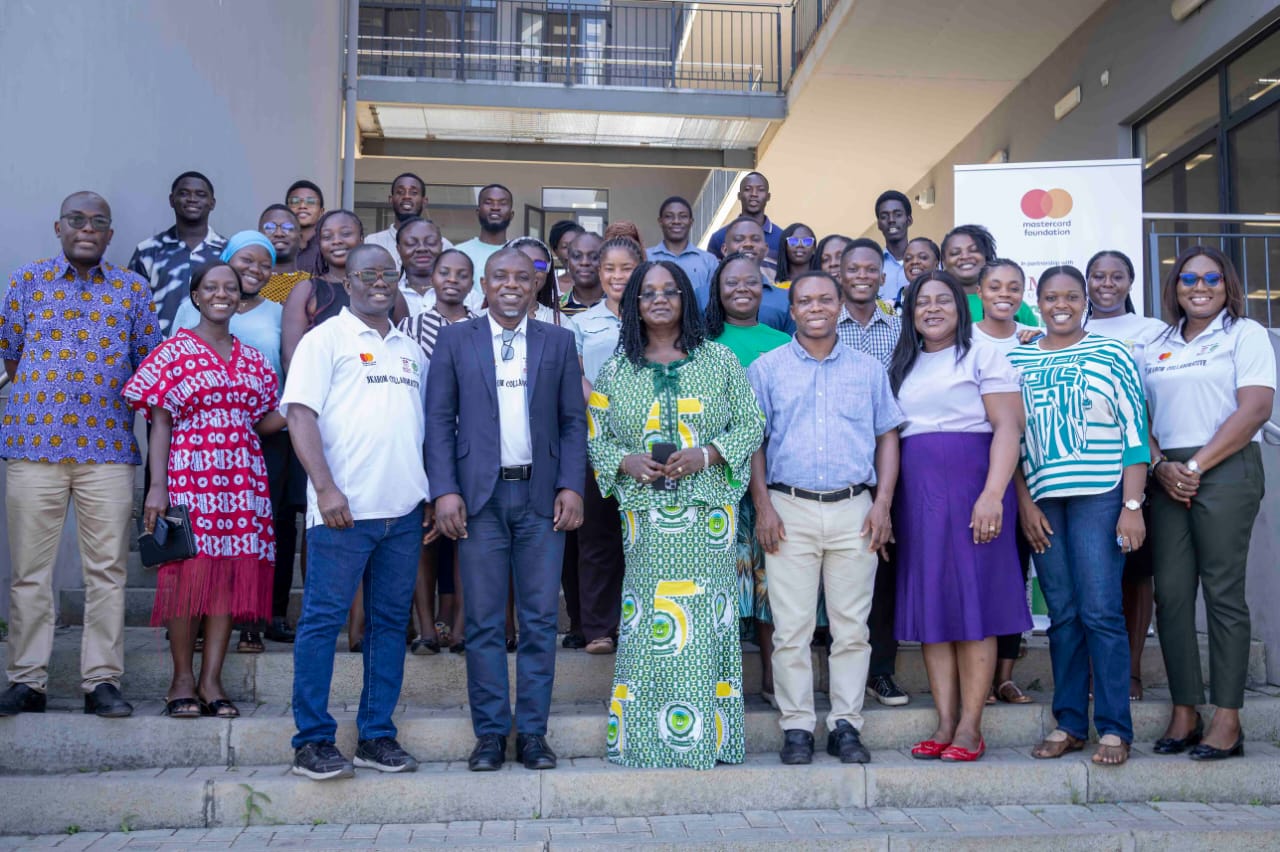
The University of Environment and Sustainable Development (UESD), Somanya, Eastern Region, through the Nkabom Collaborative and in partnership with the Mastercard Foundation and McGill University, has launched a 10-day Compost Production Training programme aimed at strengthening green enterprise development and promoting sustainable agricultural practices.
The training brings together participants from across the agro value chain, including farmers, agro-processors, waste handlers, extension officers, cooperatives, and youth groups. It is designed to equip trainees with practical knowledge and hands-on skills in organic waste management, soil health improvement, and compost production techniques. The programme combines in-house sessions with field work, allowing participants to apply classroom knowledge in real-world settings. Over the course of the training, participants will be introduced to key concepts, including identifying suitable compost materials, proper segregation of organic waste, and applying effective composting methods.
Speaking on the initiative, the Education Pillar Lead of the Nkabom Collaborative at UESD, Prof. Richard Amfo-Out, noted that the Compost Production Training forms part of broader efforts to improve livelihoods, build climate resilience, and promote inclusive green growth in Ghana. He emphasised that the training represents a critical step toward empowering individuals and communities to convert organic waste into valuable resources, while advancing environmental sustainability and green enterprise development.
The Project Administrator for the UESD-Nkabom Collaborative, Mrs. Mary Abena Agyepong, who is also the Registrar of the University, officially welcomed participants at the opening session, encouraging them to approach the training with commitment and active engagement.
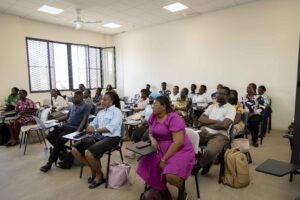
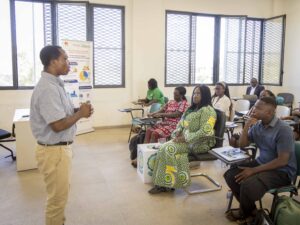
Mrs. Agyepong noted that the training goes beyond routine academic work, describing it as practical, interactive, and impact-driven. She highlighted the importance of compost production as a valuable skill, noting that materials often perceived as waste can be transformed into useful and economically viable resources. She said, the initiative aligns with broader efforts to promote sustainable practices while equipping participants with applicable, real-world skills.
The Project Administrator encouraged participants to take advantage of the opportunity, reminding them that their selection reflects confidence in their potential. She urged them to ask questions, engage actively, and maintain punctuality throughout the training period. She also expressed optimism that the programme could inspire some participants to venture into compost production as a business. In addition, she commended the facilitators for their commitment to guiding participants and creating a conducive learning environment.
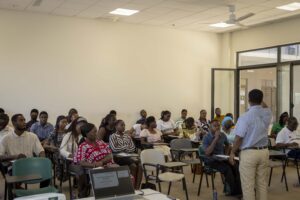
The training covers key thematic areas, including Soil Health and Organic Matter, Types of Agro-Waste and Their Nutrient Content, Fundamentals of Composting Science, Practical Composting, Composting Methods and Technologies, Managing Compost and Troubleshooting, and Legal and Regulatory Compliance. These areas are delivered through a blend of in-house instruction and field-based practical sessions. By the end of the programme, participants are expected to acquire the capacity to produce high-quality compost using locally available materials, thereby supporting sustainable agriculture and contributing to circular economy initiatives.
Facilitators include Dr. Samuel Joe Acquah, Dr. Ishmael Lente, Dr. Gifty Kumi-Amoah, Dr. Lloyd Larbi, and Dr. Stella Nyarko, Entrepreneurship lead for the UESD Nkabom Collaborative.