
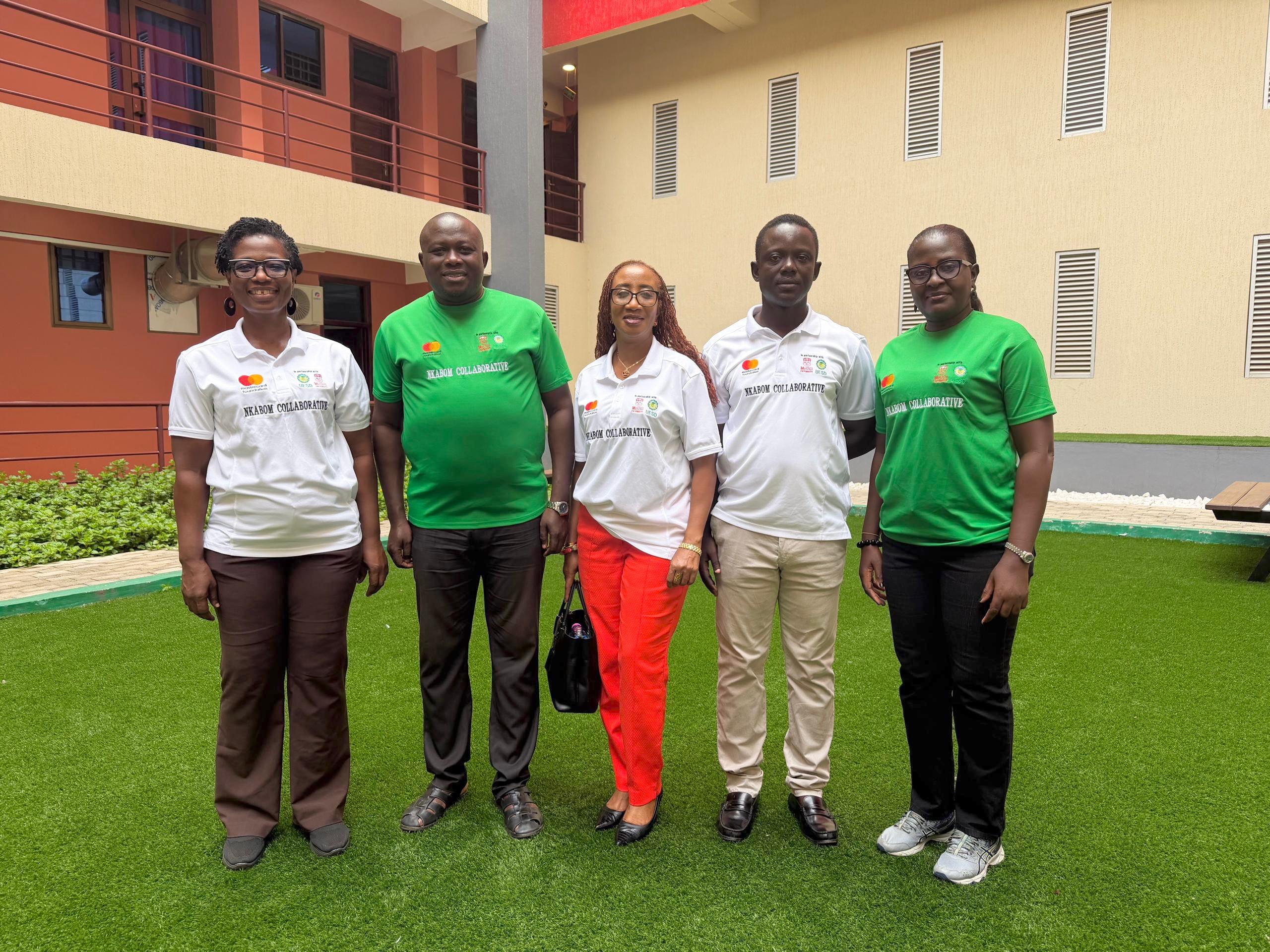
Five members of the University of Environment and Sustainable Development, UESD-Nkabom Collaborative, joined partner institutions at KNUST’s Networking Day, held on March 18 at the Department of Nutrition. The event provided a platform for partners within the Collaborative to engage, exchange insights, and strengthen institutional relationships. KNUST is the third partner institution to host the networking event, following earlier sessions organised by Ashesi University and the University of Ghana, Legon.
In his welcome address, the Provost of the College of Food Science, Prof. Philip Antwi-Adjei, underscored the critical role of networking in fostering collaboration. He noted that such engagements provide partners with the opportunity to connect, align activities with broader project objectives, and deepen collaboration toward achieving the goals of Nkabom, particularly in creating opportunities for young people, women, and vulnerable groups. He further emphasised that networking serves as a platform to explore new ideas, build strong relationships, and reinforce collective commitment as a key tool for societal transformation.
The Principal Investigator (PI) of the KNUST Collaborative, Prof. William Otoo Ellis, who is also a former Vice-Chancellor of the University, paid glowing tribute to partners Ashesi University and the University of Ghana for their pioneering roles in advancing networking within the Collaborative. He stressed the importance of regular engagements to nurture partnerships and described the meeting as a valuable opportunity for sharing, learning, and exposure. He reiterated that the meeting also aims to provide institutional updates, identify areas of synergy, and support impactful decision-making, adding that “the strength of our network lies in what we can achieve together.”
The programme began with a guided tour of the Multipurpose Integrated Programmes (MIP) Training Centres, also known as Agri-Food Centres of Excellence. Participants visited the Food Processing Laboratory, where cassava and orange-fleshed sweet potato bread were being processed, as well as aquaponics and demonstration farms featuring catfish, tilapia, and “supaku.” The tour continued to the Greenhouse Management Training Centre and the poultry section, which showcased feeding systems, hatchery operations, broilers, and layers, also to the micro-livestock section before concluding at the proposed site for the KNUST Centre of Excellence in Agri-Food Systems.
The second part of the meeting featured institutional updates from partner institutions. Dr. Christian Larbi Ayisi, Lead for Aquaculture under the UESD Collaborative, presented on behalf of the Project Coordinator, Prof. Edward Wiafe Debrah. He highlighted key achievements from Year 1, which focused on foundational activities such as curriculum development through extensive stakeholder engagement, baseline studies that informed programme direction, and the production of a documentary capturing institutional progress. He noted, however, that some academic programmes are still pending accreditation.
The presentation outlined major activities for Year 2, with a focus on two flagship capacity-building initiatives, ESTART and RUMES aimed at strengthening youth and rural entrepreneurship within Ghana’s agrifood sector. Through ESTART, 22 youth agripreneurs received intensive training, resulting in investor-ready business plans and enhanced competencies in financial management, marketing, and enterprise development. Similarly, RUMES supported 24 rural micro-entrepreneurs with practical skills in pricing, digital marketing, and financial record-keeping, while facilitating linkages with financial institutions. Collectively, these interventions have nurtured a cohort of business-ready and enterprise-ready participants.
The presentation further outlined strategic priorities for scaling impact, including stakeholder needs assessments, the development of new MSc programmes, and pilot training for 200 youth and SMEs in aquaculture and related fields. Additional plans include mentorship and incubation support for youth- and women-led enterprises, as well as policy roundtables and entrepreneurship showcase events to strengthen market linkages. Overall, the update reaffirmed UESD’s commitment to advancing education, entrepreneurship, and community engagement within the Nkabom Collaborative. One of the partners, the Association of Ghana Industries (AGI), through its Principal Investigator (PI), Mr.Seth Twum Akwaboa, announced plans to organise an entrepreneurship fair. The initiative will provide a platform for entrepreneurs trained under the Collaborative to showcase and market their products to a wider audience.
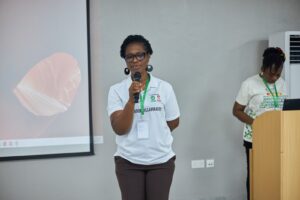
Breakout sessions were held within thematic pillar groups-Education, Entrepreneurship, Agro-Waste, as well as Access and Success-enabling participants to share notes and exchange insights. Follow-up plenary discussions centered on strengthening synergies, improving coordination mechanisms, and advancing joint action planning. Partners concurred on several key strategies moving forward, including streamlining activities, addressing operational gaps, leveraging synergies, and increasing visibility through media engagement. Emphasis was placed on intentional participant selection, inclusive communication materials that highlight persons with disabilities (PWDs), and programme designs that target the appropriate beneficiaries. Participants also called for increased female participation through affirmative action criteria, stronger collaboration with PWD groups, and greater flexibility in program implementation.
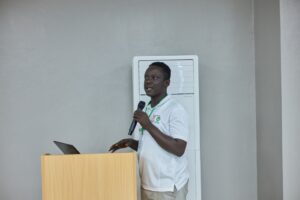
In addition, partners proposed developing a shared database of mentors and a network of facilitators within the Collaborative to enhance knowledge sharing and delivery. The meeting also highlighted the need to explore sustainable funding opportunities to support long-term impact.
Koforidua Technical University (KTU) will host the next networking session, with the date and agenda to be communicated to partners in due course.