
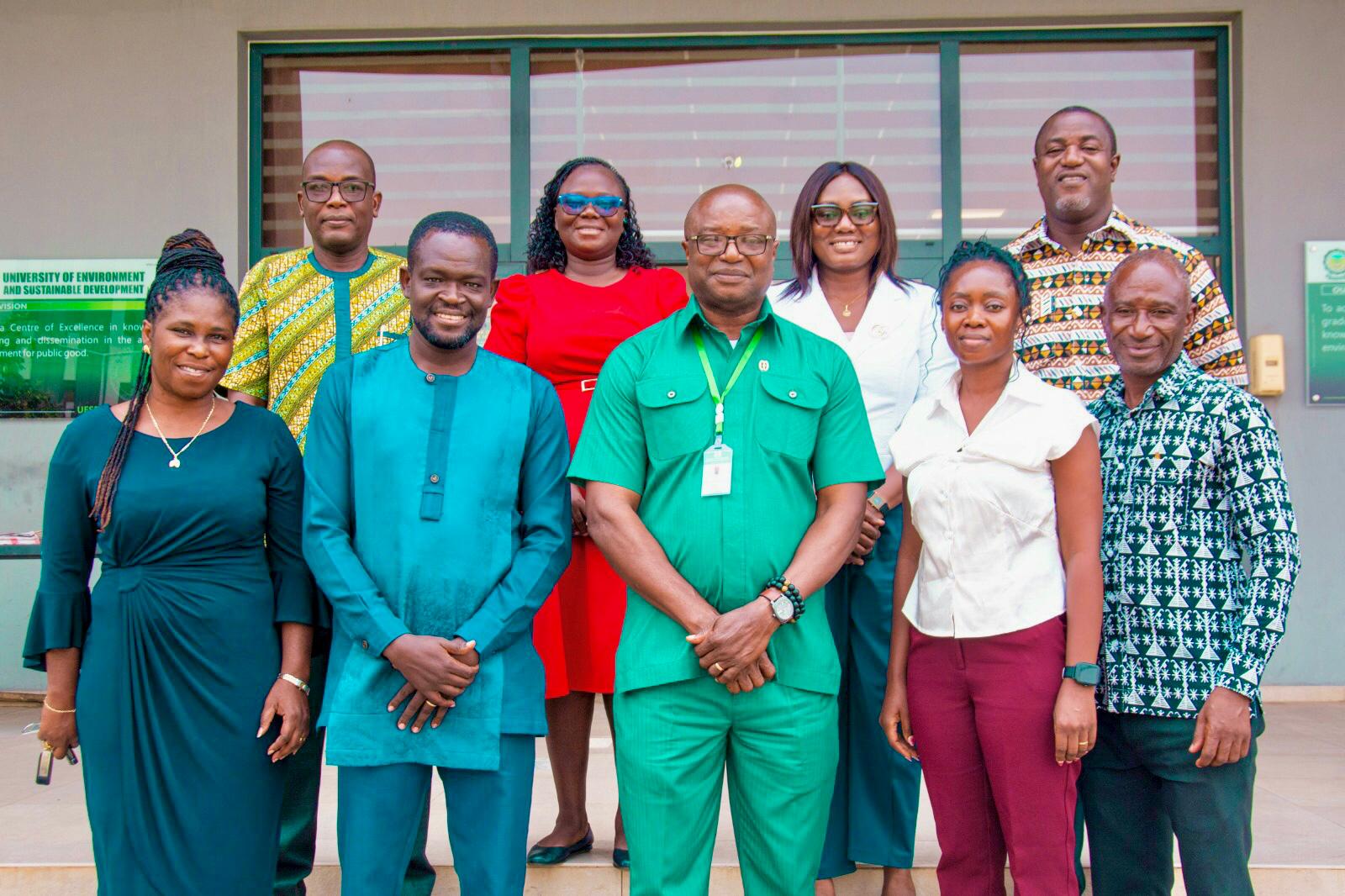
Ahead of the three-day staff retreat of the University of Environment and Sustainable Development (UESD) Nkabom Team, from 4thrd to 6th February, the Monitoring and Evaluation (M&E) Officer at the Nkabom Secretariat, Mr. Enock Amankwa Konadu, engaged the University’s M&E Team to align UESD’s Monitoring and Evaluation strategies with those of the Mastercard Foundation.
The engagement was necessitated by the requirement that all partners within the Nkabom Collaborative implement activities in line with the Mastercard Foundation’s approved M&E framework. The visit therefore focused on assessing alignment at the Collaborative level and identifying areas for harmonisation across partner institutions. The meeting was attended by members of the M&E and research teams.

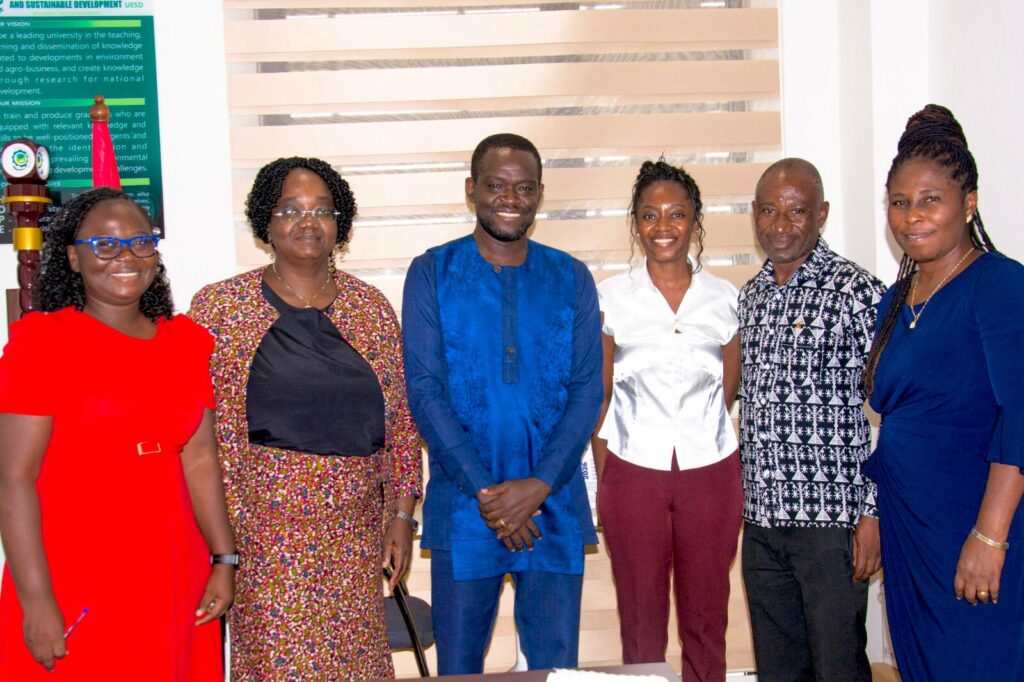
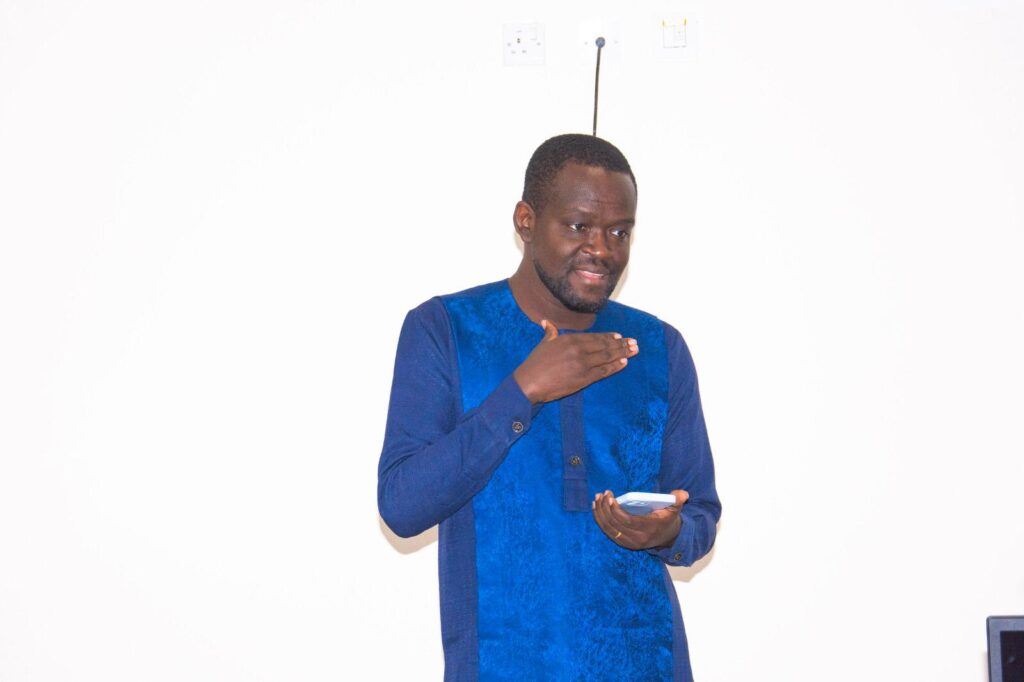
During the engagement, the M&E Lead at UESD, Dr. Andrews Kofi Taayeli, presented key M&E tools, including the Tracer Study Questionnaire and the M&E Check Matrix, and provided an overview of the overall framework and its application across partner institutions. A Gantt-style monitoring chart outlining Year Two activities was also presented, with Mr. Konadu expressing confidence in the progress made so far. Discussions also covered the Consent Form, with clarification provided on the type and intended use of data required by the Mastercard Foundation.
Participants were further informed that a centralised data collection platform will be introduced, supported by the provision of tablets to partner institutions and training for relevant staff. A dedicated application will ensure that all data are captured within a central system.
The Mastercard Foundation’s target group remains youth, with a strong emphasis on young women aged 15–35 years, who are expected to constitute 70 per cent of beneficiaries, and persons with disabilities, representing at least five per cent. While the M&E framework will guide implementation, it was clarified that it does not replace the existing quarterly reporting system.

Deliberations on inclusion highlighted the need for deliberate strategies to promote women’s participation. It was agreed that although gender targets would not be rigidly enforced, project communications and advertisements should be intentionally crafted to encourage higher female participation.
The meeting also reviewed Year One progress, with significant gains recorded, although some programmes are still awaiting accreditation from the Ghana Tertiary Education Commission (GTEC). The team further agreed to review research consent procedures to ensure alignment with Mastercard Foundation requirements.
In addition, a proposal was shared for a research initiative focused on assessing the value of mango waste and exploring post-harvest technologies to reduce losses. It was recommended that the initiative be structured around short courses aimed at waste reduction.
Mr. Konadu explained that his role includes harmonising activities at the Collaborative level by engaging with M&E representatives and consultants across partner institutions to ensure alignment between UESD’s work and the Foundation’s requirements.
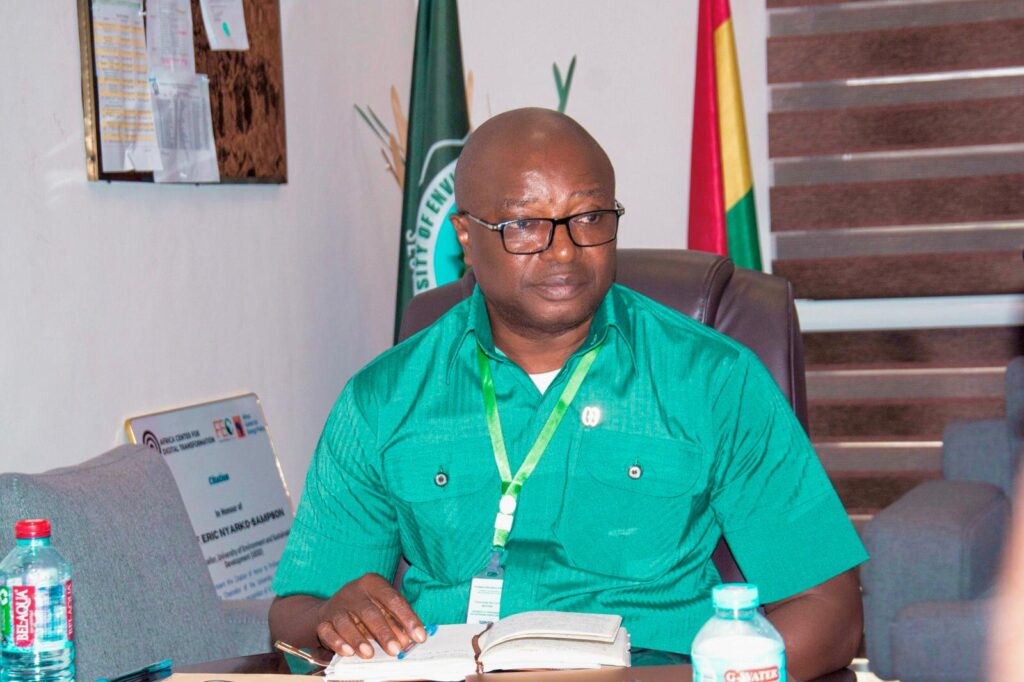
He subsequently met with the Vice-Chancellor of the University, who is also the Principal Investigator (PI) of UESD Nkabom, to further discuss the objectives of the Nkabom Collaborative. He reiterated that the overarching goal is to ensure that all partner institutions speak the same language in reporting, frameworks, and implementation. The team also called on the Registrar and Project Administrator of Nkabom, Mrs. Mary Abena Agyepong. Members of the research team present included Prof. Felicia Annin, Prof. Shine Francis Gbedemah, and Prof. Anthony Amoah.