
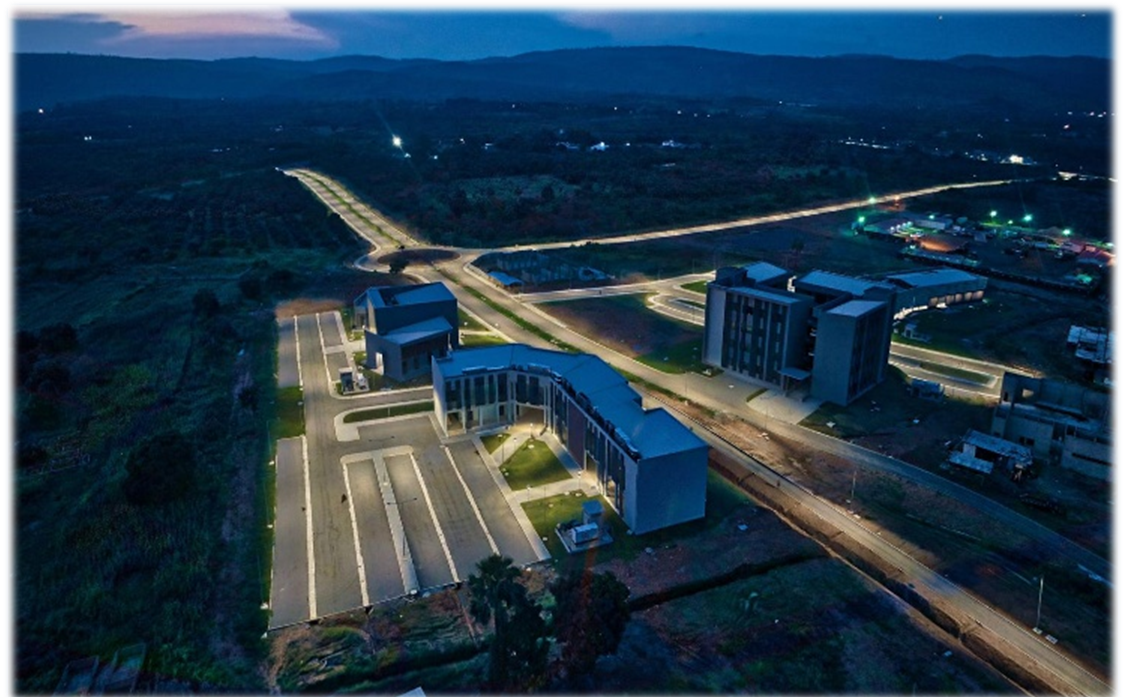
On August 5, 2025, the University of Environment and Sustainable Development (UESD, Somanya, Eastern Region, Ghana, West Africa marked an important milestone on its 5th anniversary. From its humble beginnings in 2020, UESD has emerged as a dynamic institution with a bold mission, championing sustainability and environmental stewardship in Ghana and Africa. In retrospect, UESD’s first five years have been remarkable in terms of our achievements. We have learned lessons, overcome some challenges, and look forward to the bright future that lies ahead. This 5th anniversary is not just a moment of reflection, but a declaration of the role UESD continues to play in shaping a sustainable, green future for all.
Humble Beginnings: The Birth of UESD
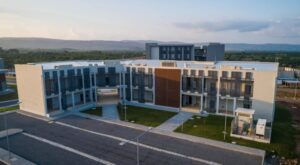
In 2020, Ghana’s educational landscape experienced a transformation when the University of Environment and Sustainable Development (UESD) opened its doors. Its creation was not a response to the usual demands of expanding University options, but a deliberate and timely intervention to address one of the most pressing global challenges: sustainability. Founded by the UESD Act (Act 898) passed by Parliament in 2015, the university’s purpose was clear from the start—Ghana needed an institution dedicated to solving the environmental challenges of the 21st century. And with climate change, resource depletion, and the need for sustainable practices becoming increasingly urgent, UESD was positioned to be a leader in this new field.
Although the world was in the midst of the COVID-19 pandemic when UESD was launched, the University’s vision remained unchanged: to provide a transformative education focused on addressing environmental sustainability challenges. From its inception, the University focused on curriculum design to equip students with the knowledge and skills required to tackle climate-related issues in Ghana and across the globe.
Located in Somanya, the Eastern Region of Ghana, UESD’s physical infrastructure was still in its nascent stages. Yet, this was no deterrent to the visionaries behind UESD. The University started with only 78 students in its first intake, but its ambitions were far from modest. The first academic year saw the establishment of two schools: the School of Natural and Environmental Sciences (SNES) and the School of Sustainable Development (SSD), offering interdisciplinary programmes that blend theory with hands-on experience. Eventually, the first batch of students become the University’s first graduates, the pioneers of UESD equipped with environmental sustainability.
From the outset, UESD’s mission included more than just academic instruction. The University embraced an innovative teaching approach that incorporated Community-Based Experiential Learning (CoBEL), a programme that allows students to engage directly with local communities, tackling real-world environmental issues. CoBEL became a cornerstone of the University’s teaching philosophy, ensuring that education did not happen in isolation but in the context of Ghana’s social, economic, and environmental realities.
Survival: Overcoming Challenges and Building Resilience
Like any young institution, UESD was not without obstacles. From the start, it faced challenges that threatened its survival and growth. The most immediate challenge was the global COVID-19 pandemic. This was the period UESD had started operations, but it had to adapt to the environment where the wearing of mask was a new normal. This adaptability not only kept the University afloat during a difficult time but also helped establish a flexible learning environment that continues to benefit students today.
Perhaps one of the greatest challenges for UESD in its early years was recruiting and retaining qualified academic staff. In a country where there is fierce competition for top talent, the University had to create an attractive environment to draw educators and researchers who were passionate about sustainability. Fortunately, UESD’s commitment to making a difference in the world helped it attract faculty members who were not just interested in academic careers, but also part of a movement to create change. These early faculty members, along with the University’s growing student body, helped to build a strong academic culture grounded in the values of integrity, collaboration, and environmental responsibility.
As UESD’s student population grew, so did the vibrancy of campus life. The creation of clubs, student organisations, and the Students’ Representative Council (SRC) brought the ideals of the University to life. Students were not only focused on their studies but also on shaping the future of UESD through leadership roles and involvement in extracurricular activities. The University’s annual HOPE Roadshow, a nurturing of the core values of Honesty, Opportunity, Perseverance, and Entrepreneurial spirit, became a symbol of the growing energy and commitment among students to effect change in the community and beyond.
In its early years, UESD also built strong relationships with more than 50 organisations, institutions, and partners that shared the University’s mission of advancing environmental sustainability. These partnerships assisted UESD to develop a reputation hub for research, innovation, and policy dialogue in the field of environment and sustainable development. Through collaborations with both local and international universities, research bodies, and NGOs, UESD solidified its position as a key player in the environmental education space.
Where We Are Now: A University in Full Bloom
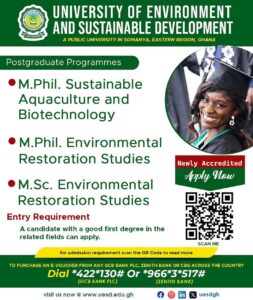
Five years after its inception, UESD has grown significantly in both size and scope. Today, the University has expanded its academic offerings from the School of Natural and Environmental Sciences (SNES) and the School of Sustainable Development (SSD), with 11 programmes in 2021 to 27 undergraduate programmes and three (3) masters programmes These interdisciplinary programmes that address the complex challenges of sustainable development, urbanisation, renewable energy, and environmental governance. The University’s student population has grown exponentially, from just 78 students in 2021 to over 1,446 students in 2025, signalling strong public confidence in UESD’s vision and the growing demand for sustainability-focused education.
Research at UESD has increased considerably with faculty members conducting impactful cutting-edge research in areas like renewable energy, sustainable agriculture, and environmental management. The University’s research agenda is aligned with national priorities, and UESD is becoming a leader in the policy discourse on climate change, food security, and sustainable development. As part of its commitment to advancing knowledge and innovation, UESD has hosted several high-profile conferences, including the Sustainable Development Conference and the UESD-FES Stakeholder Conference, both of which have become key events for academics, policymakers, and activists working on environmental issues.
The University is part of the Nkabom Collaborative, a 10-year multi-institutional initiative with six other Universities in Ghana and the Association of Ghana Industries, in partnership with the Mastercard Foundation and McGill University, Canada. The Collaborative priotises job creation and entrepreneurial opportunities for the next generation of young people and women through enhanced education in health, nutrition and climate resilient agri-food systems in Ghana. It aims to provide about 55, 000 dignified jobs at the end of the period. UESD’s focus in the collaborative is Agro-Waste Management and Aquaculture Technology Entrepreneurship initiative.
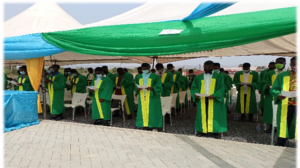
In November 2024, UESD celebrated its first-ever graduation ceremony, marking a significant achievement for the University and its students. The first cohort of graduates is now contributing to the green transformation of Ghana in various sectors, from government and policy to industry and academia. UESD’s alumni are already playing vital roles in addressing some of Ghana’s most pressing environmental challenges, including illegal mining (galamsey), deforestation, and water scarcity. At the 2nd Congregation, held on the 22nd of November, 2025 a total of 200 graduates were awarded various degrees across different disciplines. Out of the 200 graduates, 122 were from SNES and 78 from SSD. The cohort included 120 males and 80 females, with 38 students earning First Class Honours. The Valedictorian, Miss Christabel Kekeli Acorlor, earned her degree in BSc. Water Resources Development from the Department of Water Resources and Aquaculture Management at SSD with a CGPA of 3.90.
5TH Anniversary Celebration
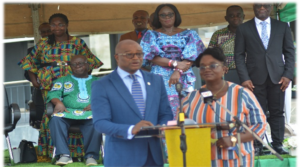
On the 5th of August, 2025, UESD launched its 5th Anniversary Celebration with the unveiling of an anniversary logo at a ceremony attended by government officials, traditional leaders, development partners, clergy, and the University community. The event, on the theme: “Strategic Environmental Initiatives Towards Securing Ghana’s Environment—The Gateway for Sustainable Collective Action, Engagement, and Policy Making” highlighted UESD’s mandate and growing national relevance. The launch was moderated by the Registrar, Mrs. Mary Abena Agyepong, and featured distinguished guests including the Eastern Regional Minister and the Minister for Public Sector Reforms.


In his address, the Vice-Chancellor, Prof. Eric Nyarko-Sampson, reflected on UESD’s establishment in 2020 during the COVID-19 pandemic as a strategic response to environmental and socio-economic challenges. He outlined significant achievements over five years. The speech of the Governing Council Chairman, Hon. Seth Emmanuel Terkper, was delivered by Prof. Paul Dela Ahiatrogah, also a member of Council. The Guest Speaker, Mr. Kwame Ntow Amoah of GNPC, praised UESD’s leadership in environmental sustainability and reaffirmed GNPC’s commitment to responsible environmental practices and partnership with the University in research and talent development aligned with Ghana’s energy transition goals. The Guest of Honour, Eastern Regional Minister Hon. Rita Akosua Adjei Awatey, described UESD as a beacon of innovation and sustainability, noting its growing impact on regional development and national environmental priorities. She acknowledged challenges but assured continued government support.
As part of the 5th anniversary celebration, members of the University Community led by Vice-Chancellor, Prof. Eric Nyarko-Sampson, on Tuesday, 8th September 2025, embarked on a float through the principal streets of Somanya. The procession moved along Trom, a suburb of Somanya, through Agomenya and Sawer, continued to the roundabout at Atua, and then returned to campus. The colourful procession united students, faculty, staff, management, and members of the Yilo Krobo Municipality in a shared celebration of five (5) years of perseverance, dedication, and remarkable progress by the University. They carried placards with inscriptions which read: UESD: Empowering a greener future UESD: Five years of Achievements, Challenges, and Progress UESD: Sustaining steps towards securing our environment UESD: Lifelong commitment to Environmental Sustainability UESD: Together for a sustainable Future UESD: Join us in shaping a sustainable future.
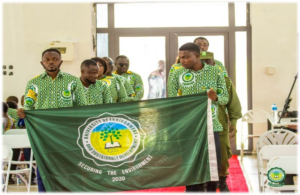
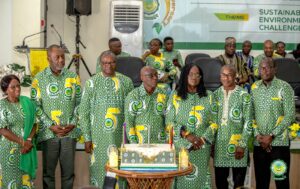
The 5th Anniversary was climaxed with a grand durbar held at the New Auditorium. A key highlight was the symbolic passing of flags from alumni through various staff groups, Management, and finally the Governing Council, underscoring the collective commitment of the University community to UESD’s vision. It brought together members of Council, Management, staff, students, partners, traditional leaders, security services, and distinguished guests, and was crowned with the cutting of the anniversary cake led by the Governing Council Chairman, Hon. Seth Emmanuel Terkper.

In his address, Hon. Terkper commended Management and staff for their dedication, describing UESD’s growth from modest beginnings into a thriving public University as remarkable. He acknowledged the former Minister of Education, Hon Mathew Opoku-Prempeh, for his support the Yilo Krobo Traditional Council for providing land and an enabling environment, praised the leadership of the Vice-Chancellor, and recognised the foundational contributions of the first Governing Council.
The Guest Speaker, Dr. Gloria Djaney Djagbletey of CSIR, emphasised the interconnectedness of humans and the environment and called for turning environmental challenges into opportunities through collaboration, including partnerships in waste management and recycling. The CEO of the Environmental Protection Agency (EPA), Prof. Nana Ama Browne Klutse, in a brief remark, warned that Ghana’s environmental problems, particularly pollution from illegal mining, have escalated beyond the country’s borders and are now affecting neighboring states. She revealed that polluted rivers from Ghana have extended into Côte d’Ivoire, turning local environmental degradation into a serious transboundary and regional issue. She therefore, urged UESD to play an active role in addressing Ghana’s environmental challenges. Together, the speakers reaffirmed UESD’s critical role in promoting sustainability as it enters its next phase of growth.
The Road Ahead: From Foundation to Flourishing
As UESD looks into the future, the next five years will be crucial for consolidating its achievements and expanding its influence. With a clear strategic vision in place, the University aims to continue developing its infrastructure, enhancing the quality of its academic programmes, and deepening its research profile.
Internationalisation will be another key focus in the coming years. UESD plans to strengthen faculty exchanges, joint research programmes, and collaborative initiatives with leading global institutions to broaden its academic reach. The University will also continue to deepen its links with industry and employers to enhance graduate employability and ensure that its students are well-prepared for the challenges and opportunities of the green economy.
The University’s commitment to sustainability will remain at the heart of everything it does. UESD’s continued success will depend on its ability to scale its impact, strengthen its research base, and build on its growing reputation as a centre for sustainability education. It is no longer enough for the University to simply educate students; it must continue to lead by example, engaging in research and community partnerships that address the urgent environmental issues of our time.
Conclusion: A National Treasure in the Making
As UESD celebrates its 5th anniversary, it stands as a testament to what can be achieved when vision, commitment, and passion align with the needs of the world. UESD is not just a University; it is a movement for sustainable change. Its impact reaches far beyond the walls of the campus, influencing policy, industry, and communities across Ghana. As we plant the seeds for future growth, UESD’s 5th anniversary serves as a reminder that sustainability is not just a goal, it is a responsibility. The next five (5) years will be pivotal as we continue to grow, build on our strengths, and further our mission to secure a green, sustainable future for generations to come.
UESD, Securing the Environment.
By: Barbara M Yakubu, University Relations Officer
bmyakubu@uesd.edu.gh