
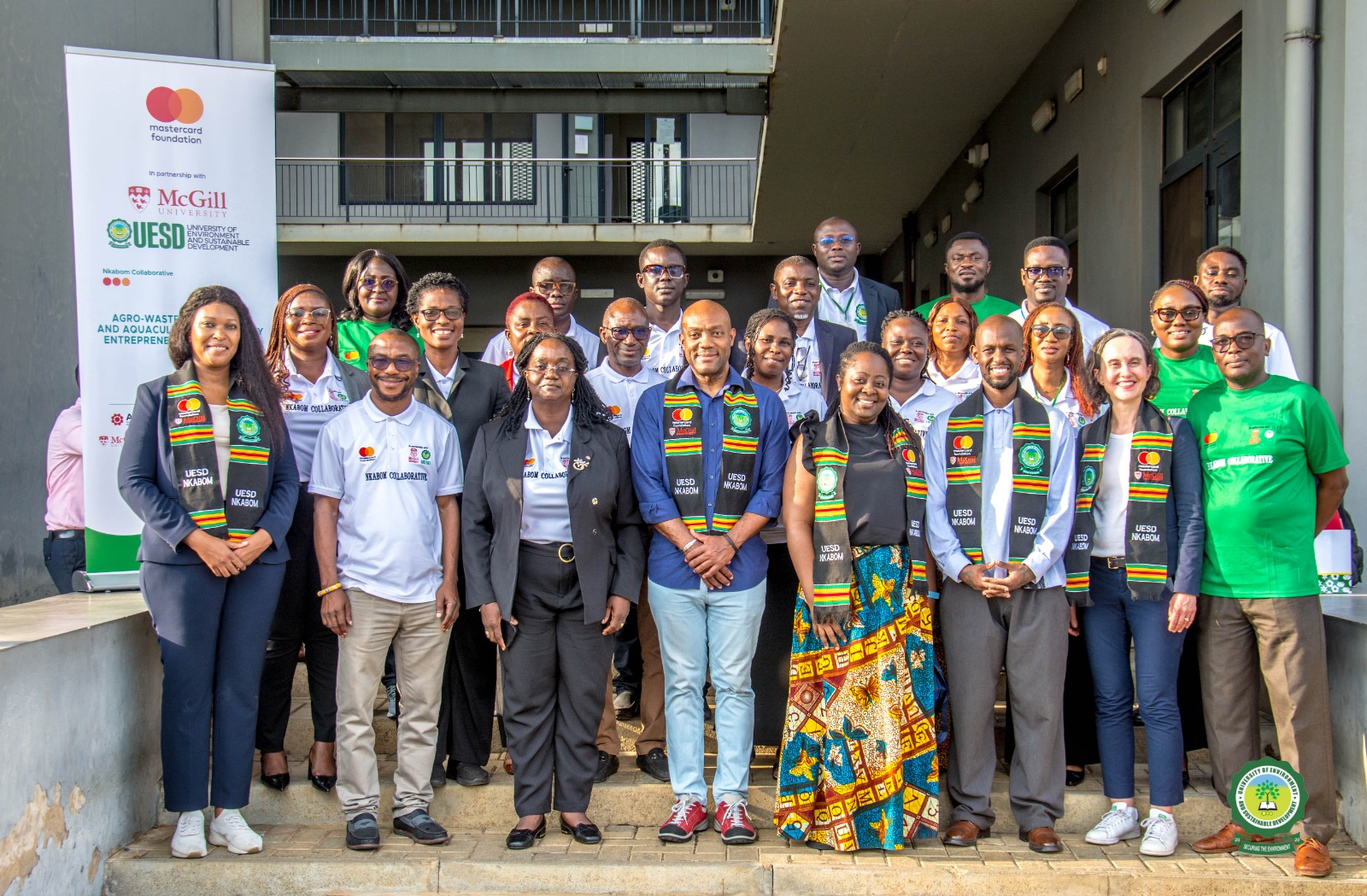
A five-member team from the Nkabom Collaborative Secretariate, McGill University, Canada, led by the Director, Mr. Pierre Brunache Jr., has met with their counterparts at the Nkabom Collaborative at the University of Environment and Sustainable Development (UESD), Somanya, Eastern Region to acquaint themselves with activities there.
He was accompanied by: Mrs. Suzana Kafadar De Rodrigues, Associate Director, Finance and Reporting; Ms. Valerie Ndiweni, Associate Director for Administration and Operations; Ms. Suzana Kadafar (Finance Officer); Mr. Stéphane Wukunzi, Communications Officer; and Nana Ekua S. Antwi, Administrative Officer.
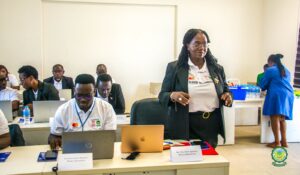
The meeting, held in the Video Conferencing Room, was hosted by the Project Investigator (PI) and Vice-Chancellor of UESD, Prof. Eric Nyarko-Sampson, together with Pillar Leads and Secretariat members including the Project Administrator, Mrs. Mary Abena Agyepong, who is also the Registrar of UESD.
The engagement aimed to discuss progress, achievements, and challenges from both UESD and the Secretariat; review UESD’s structure and coordination mechanisms supporting implementation; consolidate and align the project implementation plan across institutions; identify operational challenges such as synchronising activity schedules with the academic calendar; align branding and communications with Mastercard Foundation guidelines; and strengthen programme communication and coordination.
In his opening remarks, Mr. Brunache expressed the team’s excitement about the engagement. He noted that the meeting formed part of partnership development, compliance strengthening, and communications alignment with its seven partners including UESD. He emphasised the need for an agreed operational framework with clear leadership structure, reporting lines, and synchronised work schedules.
Prof. Nyarko-Sampson welcomed the team and affirmed that UESD is committed to keeping activities on schedule. He provided an overview of UESD’s team structure and indicated that communication has reached every district in the Easten Region to inform stakeholders and secure their buy-in. He noted that community engagement efforts have extended to traditional rulers, youth groups, political and religious leaders, and the Ghana Journalists Association (GJA) to inform them about the collaborative and the roles they can play. He added that the first training cohort under the Rural Micro-Enterprises Starter (RUMES) programme included small business owners from the catchment areas, providing valuable insights into local realities.
Presenting an overview of Year One activities, the Project Coordinator and Pro Vice-Chancellor, Prof. Edward Wiafe Debrah, reported that activities were largely accomplished. These included baseline studies, procurement of project equipment, and piloting of entrepreneurship training programmes. He announced that draft documents seeking approval to run Diploma and Bachelor’s programmes in Agro-Waste and Aquaculture have been submitted to the Ghana Tertiary Education Commission (GTEC). He added that the Collaborative ensured that all activities aligned with its three pillars: Education, Access and Resources, and Entrepreneurship, and noted that all pillar leads have been fully established. The Challenges encountered in the period included mobility constraints, procurement timelines and the low participation of females within the target age bracket for the pilot trainings.
Prof. Wiafe Debrah also highlighted that the Year Two Plan has been completed, with continued piloting of training programmes and the introduction of a policy roundtable.
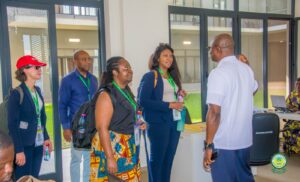
During breakout sessions, the various teams outlined expected outcomes. The Finance Team confirmed timelines for financial submissions, identified areas requiring Secretariat support, and developed a clear financing and resource mobilisation plan.
The Communications Team developed clear steps and timelines for brand alignment, shared content priorities, and drafted a concise communications and visibility strategy to ensure consistent messaging.
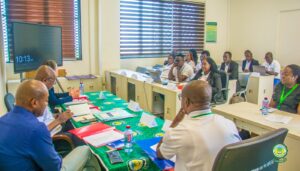
The Pillar Leads for Agro-Waste, Aquaculture, Entrepreneurship and Research produced a roadmap outlining next steps, coordination tools, and timelines for implementation while the administrative team reviewed processes for improved communication and coordination with the Secretariat.
In his closing remarks, Mr. Brunache once again commended the UESD team members for their dedication and commitment to the cause, and urged them to keep up the good work.